Tag: technology

  • 10 Benefits of the Internet of Things You Should Know [2027]

    10 Benefits of the Internet of Things You Should Know [2027]

    The Internet of Things is not just a jargon, but rather a technology that is changing the face of daily life and modernizing industries all around the world; IoT simply connects devices, sensors, and systems in such a way that they can sense and decide for themselves and thus allow for smarter environments. With IoT’s integration in various sectors, understanding its advantages is key to appreciating its role in our world today.

    1. Increased Efficiency and Automation

    IoT-driven automation is changing the game in sectors ranging from manufacturing to healthcare. In manufacturing, for instance, smart factories make use of IoT to automate tedious work on machine tasks, minimize errors, save time and resources, and more. 

    In homes, IoT-enabled devices like smart thermostats and lighting systems automatically set the environment according to activity; it helps manage energy usage effortlessly. All such automated processes increase efficiency by making less human interjection, saving time, and ensuring that man-made error is minimal.

    2. Cost Savings

    One of the biggest advantages IoT offers is a means of lowering costs. Real-time monitoring of equipment makes an IoT system predict when maintenance is needed, saving companies from costly repairs and downtimes. On the consumer’s end, IoT devices like smart thermostats and energy monitors do provide real-time data, encouraging users to make energy efficient choices, resulting in lower utility bills.

    3. Better Decision-Making Through Data Insights

    IoT devices generate vast amounts of data that can be analyzed to make informed decisions. For instance, information from car will help auto manufacturers produce more safe features. Healthcare providers are in a position to make personal treatment plans because of the information collected from wearable health devices. Considering insights derived from IoT data, businesses and individuals can make better decisions that result in a better outcome.

    4. Rich Customer Experiences

    With IoT, a business can now gain deeper insights into customer behavior, and this enables them to meet the needs of service provision and delivery. For instance, in retail, IoT can personalize a promotion based on managing stock and popular items. 

    In hospitality, such examples include IoT-enabled rooms in hotels with customized settings for lighting, temperature, and entertainment. Improved customer satisfaction and loyalty are outcomes of these curated experiences.

    5. Management and Sustainability of Resources

    IoT affects sustainable behavior greatly. For instance, smart agriculture incorporates IoT sensors to monitor the soil moisture so as not to waste much water. Similarly, electricity systems implemented by IoT ensure efficient distribution of energy by consuming real-time at the user’s end thus avoiding unneeded or excess generation. 

    All these resource-saving innovations have led to more environmentally friendly ways of conducting business and decision-making for businesses and individuals alike.

    6. Enhanced Safety and Security

    IoT devices ensure security and safety equally. In homes, the smart locks, cameras, and sensors ensure well-monitored privacy and alert messages are sent in case of suspected criminal activity. IoT-enabled safety appliances at work can sense hazard conditions and alert employees and management. IoT healthcare devices connected provide health data to allow medical intervention in due time.

    7. Remote Monitoring and Control

    One of IoT’s remarkable benefits is remote access. For instance, remote checking of security systems by the owners or firms monitoring critical machineries in real-time can take benefits from this advantage. It especially benefits the health sector as wearable devices enable doctors to monitor patients elsewhere and, therefore, get them the proper care in time.

    8. Effective Supply Chain Management

    IoT benefits the supply chain and logistics since these will improve efficiency and accuracy. IoT enables companies to trace transit goods, monitor conditions, and track updates of inventory levels in real time. 

    For example, IoT sensors in shipping containers alert firms with information on temperature fluctuations that may render perishable commodities unfit for sale. This situational awareness of firms means faster responses to changes to avoid loss and improve inventory management.

    9. Improved Quality of Life and Convenience

    IoT has been seamlessly intertwined in our daily lives to provide convenience and quality of life. For example, smart home devices, such as your refrigerator reminding you to buy groceries or a fitness tracker that records your activity every day, make our activities lighter and more productive. As more technology is added through the internet of things, it is anticipated that even more mundane tasks will be made to free up more time to do more enjoyment.

    10. Increased Economic Growth and Innovation

    IoT encourages innovation in business, resulting in new enterprise opportunities and the increased economy. IoT has enabled entrepreneurs and enterprises to create novel products and services. One should remember ridesharing apps, smart health monitoring devices, and home automation systems-all fruits of IoT innovation. The new services and products resulting from such innovation are creating new economic opportunities and inspiring further technological advancements.

    Conclusion

    The Internet of Things is making life simpler, businesses smarter, and our use of resources more sustainable. From improving personal convenience to helping companies cut costs, IoT’s benefits are far-reaching and impactful. 

    For companies seeking to explore these possibilities, IoT consulting provides the guidance needed to implement IoT in a way that maximizes value and minimizes risk. As IoT continues to evolve, consulting services can play a pivotal role in helping organizations realize its full potential and overcome any challenges along the way.
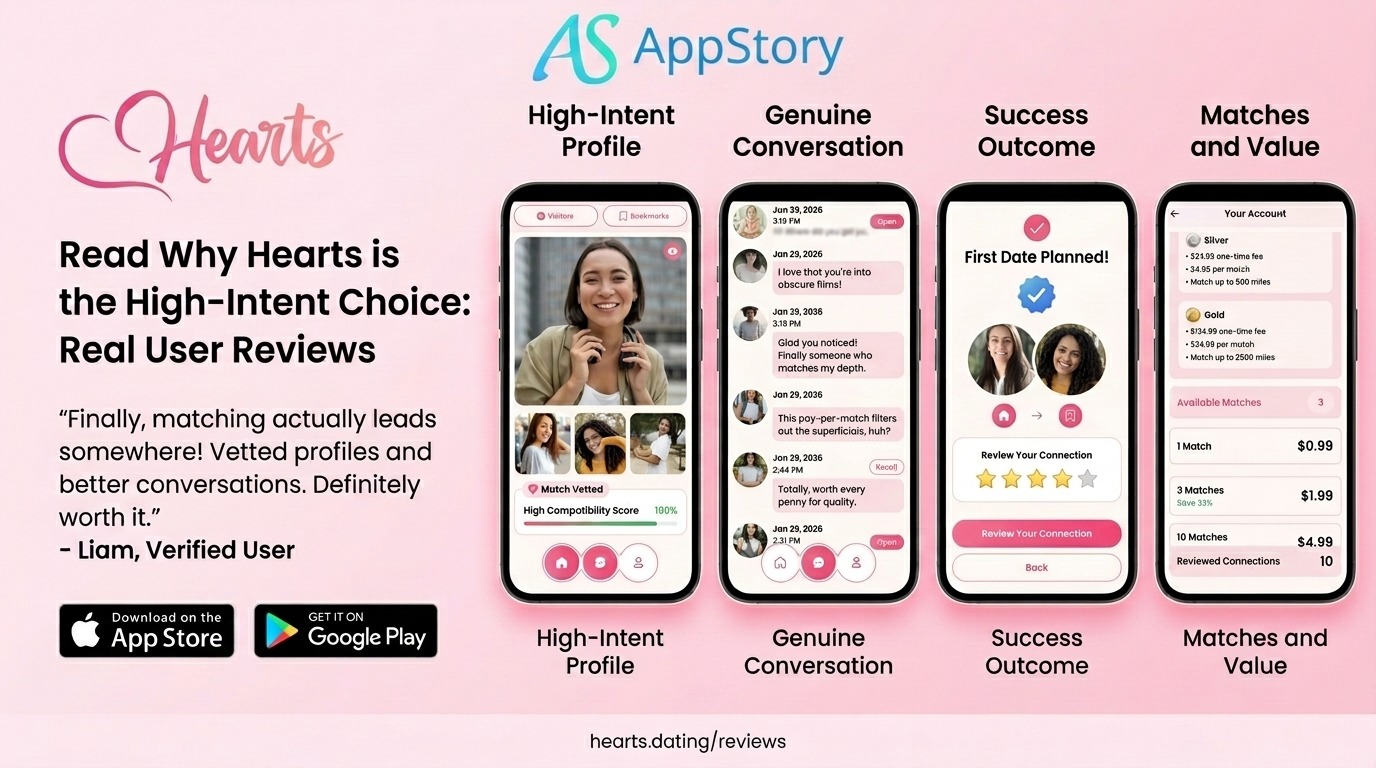
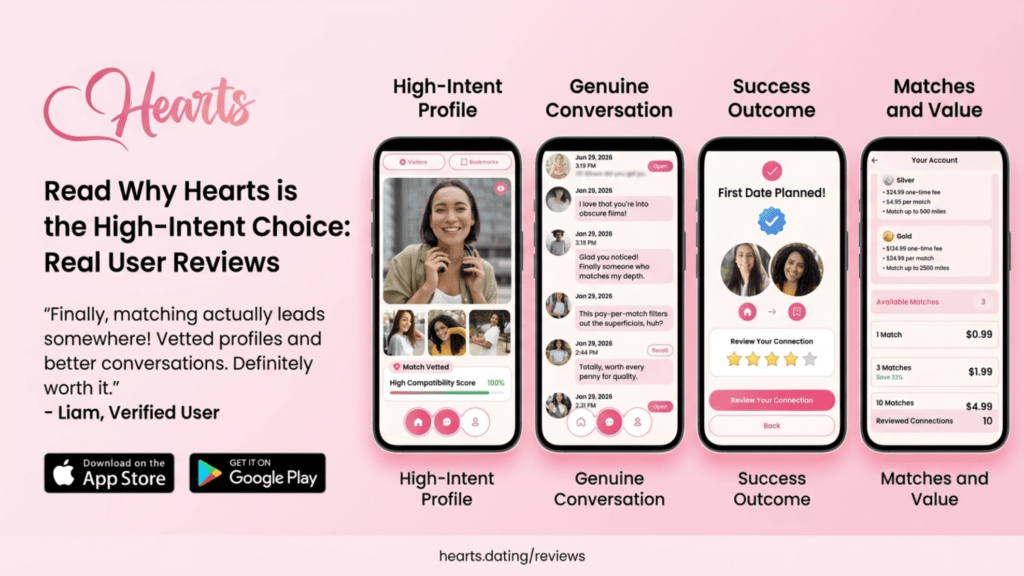
  • Hearts Dating App Review: A Pay-Per-Match Model That Actually Makes Sense

    Hearts Dating App Review: A Pay-Per-Match Model That Actually Makes Sense

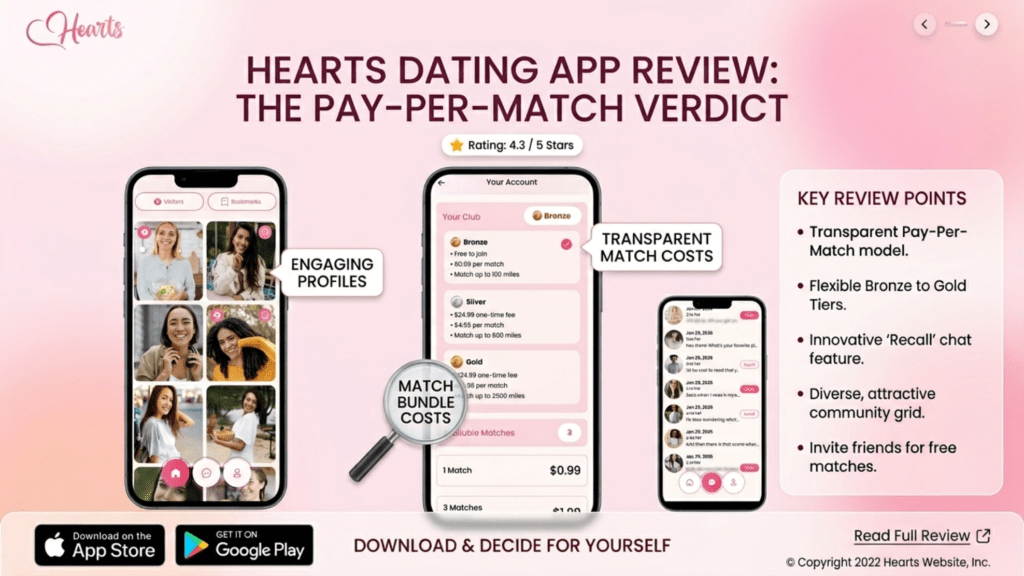
    The online dating industry has long been dominated by subscription-based models that lock core features behind monthly paywalls. Users routinely spend $20–$40/month on apps that still deliver low match quality, artificial swipe limits, and aggressive upsells. Hearts enters the market with a radically different approach: pay only when you actually connect. Built by founder Hari Gopal after years of personal frustration with traditional dating apps, Hearts operates on a transparent, pay-per-match economy that charges exactly $1 per successful connection. With a USPTO-granted utility patent (2024) and a mobile-first design, Hearts is positioning itself as the antidote to subscription fatigue.

    Hearts Dating App Review

    ⚙️ How It Works

    Hearts strips away gamification and replaces it with intentionality. The flow is simple:

    1. Send a Message: Find someone you’re interested in and send them a direct message.
    2. Blurred Preview: The recipient receives your message, but the text is blurred. They can view your full profile for free before deciding.
    3. Open to Match: If they’re interested, they tap to open the message. At that exact moment, both users are charged $1 (1 match each).
    4. Free Unlimited Chat: Once opened, the conversation unlocks permanently. All future messaging between you two is completely free.
    5. Recall Anytime: Changed your mind? You can instantly recall any unopened message with zero charge.

    This model ensures that money only changes hands when mutual interest is confirmed, aligning the app’s success directly with user satisfaction.

    💰 Pricing & Value Proposition

    FeatureHeartsTraditional Apps (Tinder, Bumble, Hinge)
    Monthly Subscription❌ None✅ $20–$40/month
    Profile Browsing & Likes✅ Free⚠️ Often limited
    Messaging✅ Free (after match)🔒 Paywalled or restricted
    Cost Per Match✅ $1 (both users)💸 ~$10+ (based on subscription ROI)
    Payment Security✅ Apple/Google Store processed✅ Store processed

    Value Breakdown: Hearts charges exactly $1 per match, with both parties contributing. If you make 10 meaningful matches in a month, you spend $10. On traditional apps, that same activity would typically require a $30+ subscription with no guarantee of matches. Hearts delivers 100% value on spend because you only pay for confirmed connections.

    ✅ Pros & ❌ Cons

    ✅ Pros❌ Cons
    Zero subscription traps – No auto-renewals, no monthly commitmentsRequires mutual action – Both users must open the message to connect
    Transparent pricing – Exactly $1/match, clearly communicated upfrontNewer user base – Matching speed may vary by region
    Unlimited free features – Browse, like, view visitors, and send messages freelyMobile-only – No web or desktop version currently planned
    Message recall – Cancel unopened messages instantly, no charge$1/match may deter casual browsers
    Patented technology – USPTO utility patent (2024) protects the modelUpcoming Clubs tiers – Distance-based pricing may feel premium to some
    Secure transactions – All purchases routed through Apple/Google stores

    🎯 Who Is Hearts Best For?

    • Budget-conscious daters who refuse to pay for unused subscriptions
    • Intentional users tired of endless swiping and ghosting
    • International & emerging market users where monthly subscriptions are financially prohibitive
    • Professionals & older demographics who prefer straightforward, value-driven platforms
    • Anyone who values transparency over algorithmic engagement tactics

    📊 User Experience & Design

    Hearts opts for a clean, no-nonsense interface. There are no flashy animations, countdown timers, or artificial urgency tactics. The focus is entirely on profile discovery and direct communication. Navigation is intuitive, profile loading is fast, and the blurred-message mechanic feels innovative rather than gimmicky. The app’s mobile-native design ensures smooth performance on both iOS and Android, with secure, familiar checkout flows via the respective app stores.

    🔮 What’s Next: The “Clubs” Feature

    Hearts is preparing to roll out Clubs, a distance-based matching tier system:

    • Bronze: Free to join, $1/match, up to 100 miles
    • Silver: $25 one-time, $5/match, up to 500 miles
    • Gold: $125 one-time, $25/match, up to 2,500 miles

    This optional feature caters to users willing to pay more for expanded geographic reach while keeping the core pay-per-match fairness intact.

    Hearts Dating App Review


    Headline: Why the Creator of Hearts is Killing the Monthly Subscription

    The Backstory: I’ve been on dating apps since 2012. After sinking hundreds of dollars into $30/month subscriptions for only a handful of meaningful matches, the math didn’t add up. I was paying $10 per match. I realized that out of 400 million users worldwide, only 5% actually pay for subscriptions. I built Hearts to bridge that gap—a platform where you don’t pay for the hope of a connection; you only pay $1 when a connection actually happens.

    The “Hearts” Difference: While every other app locks basic features behind a paywall, Hearts is wide open. You can browse, like, and visit as many profiles as you want for free. We replaced the “monthly tax” with a simple pay-per-match model. It’s dating without the financial baggage.

    The Innovation: Our “blurred message” logic is a game-changer. If you like someone, you send a message. They see your profile and a blurred preview of your text. If they’re interested, they “unlock” the chat. At that moment, both users pay $1, and the conversation is free forever.

    The Surprise: I was shocked to find we were the first to ever do this. We secured a USPTO utility patent in 2024, which gives us a massive edge in a crowded market.

    The Vision: We are mobile-first (iOS and Android) for maximum security. We’re also launching “Clubs” soon—Bronze, Silver, and Gold tiers that let users expand their search radius up to 2,500 miles for a one-time entry fee.

    Advice for Creators: Know your market, have a clear path to profit, and—most importantly—patent your unique ideas before someone else does.


    https://play.google.com/store/apps/details?id=com.heartsdating&pcampaignid=web_share

    🏁 Final Verdict

    Rating: 4.5 / 5 ⭐

    Hearts isn’t trying to be everything to everyone. Instead, it solves one glaring problem in online dating: paying for access instead of results. By charging only when mutual interest is confirmed, it removes financial friction, encourages intentional behavior, and delivers exceptional value for the cost. While the user base is still growing and the model requires both parties to engage, the patented pay-per-match system, transparent pricing, and secure mobile architecture make Hearts a standout alternative in a crowded market.

    If you’re exhausted by subscription traps, artificial limits, and low ROI on dating apps, Hearts is absolutely worth a try. It’s not just a different pricing model—it’s a different philosophy.

    ⭐
    Community Rating 4.8/5
    1 total contest vote
  • Benefits of Investing in Taxi App Development Solutions for Modern Businesses

    Benefits of Investing in Taxi App Development Solutions for Modern Businesses

    The on-demand economy has transformed how people commute, making convenience, speed, and reliability essential for users. Taxi booking applications have become a core part of urban transportation by offering seamless ride-booking experiences through mobile devices. For businesses aiming to enter or expand in this space, working with a Taxi App Development Company can be a strategic step toward long-term success.

    Investing in taxi app development solutions is more than just launching a digital product. It enables businesses to build scalable models, improve operational efficiency, and meet evolving customer expectations. Below are the key benefits that make taxi app development a valuable investment.

    Enhanced Customer Convenience and Experience

    One of the primary reasons behind the popularity of taxi apps is the level of convenience they offer. Users can book a ride within seconds without waiting on the roadside or calling a dispatcher.

    Modern taxi apps provide features such as real-time tracking, fare estimation, multiple payment options, and ride scheduling. These functionalities simplify the entire process and enhance the user experience. As a result, businesses can achieve higher customer satisfaction and retention rates.

    Multiple Revenue Generation Opportunities

    Taxi app development solutions open the door to multiple revenue streams. Unlike traditional taxi services that rely on fixed pricing, digital platforms provide flexible earning models.

    Businesses can generate revenue through driver commissions, surge pricing during peak hours, cancellation charges, subscription plans, and in-app advertisements. This diversified approach ensures consistent income and increases profitability over time.

    Data-Driven Decision Making

    Taxi apps provide access to valuable real-time data that helps businesses make informed decisions. By analyzing user behavior and operational metrics, companies can improve their services and strategies.

    Key insights include peak booking times, frequently traveled routes, customer preferences, and driver performance. Leveraging this data allows businesses to optimize pricing, enhance service quality, and identify growth opportunities.

    Scalability and Business Expansion

    Scalability is one of the biggest advantages of taxi app development solutions. A well-built application can support business growth without requiring major changes to the core system.

    Companies can expand to new locations, onboard more drivers, and introduce additional services such as premium rides or carpooling. This flexibility ensures that the app remains relevant as the business evolves.

    Efficient Fleet and Driver Management

    Managing a large fleet manually can be complex and inefficient. Taxi apps simplify this process by offering advanced fleet management features.

    Businesses can monitor vehicle locations in real time, track driver activity, and optimize routes using GPS technology. Automated dispatch systems further improve efficiency by assigning rides to the nearest available driver. These features reduce operational costs and enhance overall productivity.

    Improved Safety and Security

    Safety plays a crucial role in the success of any taxi service. app development solutions include built-in safety features that protect both passengers and drivers.

    Common features include driver verification, emergency SOS buttons, ride tracking, and the ability to share trip details with trusted contacts. These measures build trust and encourage more users to rely on the platform.

    Competitive Advantage in the Market

    The transportation industry is highly competitive, with many players offering similar services. A well-designed taxi app can help businesses stand out by delivering a superior user experience.

    Digital platforms offer faster booking, transparent pricing, and better accessibility compared to traditional services. This gives businesses a strong competitive advantage and helps attract a larger customer base.

    Integration with Advanced Technologies

    Taxi app development solutions can integrate with modern technologies that improve performance and user experience. Artificial intelligence can optimize routes and reduce travel time, while machine learning can predict demand patterns.

    These technologies help create smarter and more efficient taxi applications.

    Support for Sustainable Transportation

    Environmental concerns are driving the adoption of sustainable transportation solutions. Taxi apps can support eco-friendly initiatives by integrating electric vehicles and promoting ride-sharing options.

    Optimized route planning also helps reduce fuel consumption and emissions. This not only benefits the environment but also enhances the brand image among environmentally conscious users.

    Improved Customer Retention and Engagement

    Taxi apps provide various tools to engage users and encourage repeat bookings. Features such as loyalty programs, discounts, referral bonuses, and personalized notifications help maintain customer interest.

    By offering consistent value and a smooth user experience, businesses can increase customer lifetime value and build long-term relationships.

    Continuous Innovation and Market Adaptability

    Another important benefit of investing in taxi app development solutions is the ability to adapt quickly to changing market trends and customer expectations. The transportation industry is constantly evolving, with new technologies, regulations, and user demands shaping the landscape. A well-developed taxi app allows businesses to introduce updates, add new features, and integrate emerging technologies without disrupting existing operations. Whether it is incorporating digital wallets, enabling contactless rides, or launching subscription-based services, this flexibility ensures that businesses remain competitive and relevant in a fast-changing market.

    Conclusion

    Investing in taxi app development solutions offers numerous advantages for businesses looking to succeed in the on-demand economy. From improving customer convenience and generating multiple revenue streams to enabling scalability and integrating advanced technologies, the benefits are substantial.

    As the demand for digital transportation solutions continues to grow, businesses that embrace innovation will stay ahead of the competition. Collaborating with a reliable Taxi App Development Company ensures the development of a robust and future-ready application that meets modern user expectations and supports long-term growth.

  • 7 PWA Trends That Will Define Mobile and Web development in 2026

    7 PWA Trends That Will Define Mobile and Web development in 2026

    The web experience on mobile is changing again — quietly but profoundly. What began as a lightweight alternative to native apps has now evolved into a robust digital ecosystem powered by Progressive Web Apps (PWAs). These aren’t just websites anymore; they’re fully capable applications that can install, notify, cache, and transact — all without a traditional app store. As browsers mature and performance APIs evolve, PWAs are set to redefine what “mobile-first” truly means in 2026. 

    For businesses, this evolution isn’t abstract — it’s strategic. The smartest brands are partnering with expert progressive web app development companies to gain app-like engagement without the overhead of native development. Here’s what’s coming next. 

    1. Near-Native Performance Through Edge Integration 

    Performance is no longer the Achilles’ heel of web apps. The next wave of PWAs will leverage edge computing to minimize latency, pushing assets and logic closer to users. This shift allows apps to load instantly, even in low-connectivity environments. Advanced custom PWA development solutions are already embedding service workers with edge routing logic — combining real-time responsiveness with native-grade smoothness. 

    But the real innovation lies in distributed execution. As CDNs evolve into intelligent compute networks, PWAs can offload computation directly to the edge. This means complex tasks like personalization, recommendations, or fraud detection can happen milliseconds from the user — without hitting the origin server. 

    For industries like eCommerce or fintech, this turns the PWA into a near-native powerhouse: instantaneous, safe, and intelligent. The result? Reduced bounce rates, higher engagement, and a seamless experience that rivals any native app — at a fraction of the development cost. 

    By 2026, the development of progressive web applications will increasingly include edge orchestration as standard rather than a luxury. 

    2. Offline Capability Goes Intelligent 

    Offline mode used to be a backup feature. In 2026, it becomes a strategic layer. Smart caching and predictive prefetching will allow PWAs to anticipate user intent — downloading key data before it’s even requested.  

    For industries like travel, banking, and logistics, this turns downtime into engagement time. Leading progressive web app development services are integrating AI-driven caching algorithms to make “always available” a practical reality. 

    Imagine a travel app that predicts your upcoming flight and automatically caches your boarding pass, gate info, and real-time map updates before you even deboard the plane. Or a retail app that preloads your most browsed categories before you reconnect. 

    This is where machine learning meets service workers — transforming traditional caching into adaptive intelligence. Developers are moving beyond static manifests to dynamic behavior models that evolve with user patterns.  

    It’s not just about offline access — it’s about predictive continuity, giving users a sense of control and reliability that even native apps sometimes fail to match. 

    3. Biometric and Hardware-Level Security APIs 

    Security is crossing a new threshold. With browser-level access to biometric authentication (via WebAuthn and FIDO2), PWAs can now offer fingerprint or face login with native-level encryption. That means passwordless, frictionless access without compromising compliance. In 2026, progressive web application development companies will make security design as integral as UX — not an afterthought. 

    Modern browsers now act as secure intermediaries between hardware and application logic. This means sensitive authentication data never leaves the user’s device — a massive step forward for data protection. 

    Financial institutions are already experimenting with device-bound credentials, where cryptographic keys are tied to the user’s hardware. Even if credentials are compromised on the network, they’re useless elsewhere. 

    For progressive web app developers, this convergence of cryptography and convenience will redefine how trust is built on the web. Security will no longer be a compliance checkbox; it will become a competitive differentiator — one that sets great apps apart from the rest. 

    4. Super-App Architecture Through Modular PWAs 

    PWAs will stop being standalone entities. The new trend is modular super-app ecosystems — independent micro-PWAs working in tandem under one umbrella. Think of a retail platform where payments, support, and loyalty each run as self-contained modules. Custom PWA development solutions are already architecting this microfrontend-based flexibility, allowing brands to scale or pivot rapidly. 

    This is similar to how microservices emerged in backend architecture: instead of making monolithic apps that are hard to maintain, companies are assembling modular PWAs where development, deployment, and update of every module are independent. 

    The advantage? Faster innovation cycles and less risk. A new loyalty feature can be rolled out without affecting checkout or account modules. 

    For enterprises, this translates into operational agility: the ability to adapt quickly to new business models or market shifts without reengineering the entire system.  

    By 2026, composable front-ends will be the default model for progressive web app development companies in building agile digital ecosystems. 

    5. Push Notifications Evolve into Smart Engagement 

    Push notifications will continue their shift from simple alerts toward contextual, behavior-driven engagement tools. AI will refine what gets sent, when, and why — reducing noise while boosting conversions. The best progressive web app development companies are embedding predictive engagement engines that blend user analytics with timing intelligence to make notifications feel human, not automated. 

    For example, a fintech PWA might only send a balance alert when spending behavior crosses a pattern threshold. A retail app could delay promotional notifications until the user’s usual browsing window, increasing the likelihood of interaction. 

    This marks a shift from broadcast to precision engagement. Instead of treating all users equally, modern push systems analyze micro-moments — intent, context, and emotional timing. 

    Brands that master this nuance will find their PWAs outperforming traditional apps in retention metrics. It’s not about sending more — it’s about sending smarter. 

    6. Unified Experience Across Screens 

    The “mobile web” is now a misnomer. PWAs or Progressive Web Apps are meant to be installed anywhere, from mobile phones and tablets to desktops, cars, and even TVs. 

    Responsiveness isn’t just about layout; it’s about interaction. Modern progressive web application development services emphasize adaptive UX logic to make sure continuity across devices is continued. Your session on one screen seamlessly resumes on another, just like a cloud-native application.  

    In 2026, the boundaries between mobile and desktop user journeys will be removed. Shared storage, progressive sync, and contextual design will enable users to switch between experiences with fluidity.  

    For instance, a user might start shopping on a tablet, continue with the payment on a phone, and review order status on a smart display — all within one cohesive PWA ecosystem. 

    This shift toward experience fluidity will redefine customer expectations. Businesses that deliver this “follow-me” continuity will dominate engagement metrics. 

    Progressive web app development companies are increasingly using APIs like Web Share Target, Web Bluetooth, and WebUSB to bridge these experiences beyond screens — integrating PWAs into physical ecosystems of connected devices. 

    7. Sustainability Through Lighter Codebases 

    Efficiency is the new prestige metric. PWAs consume less energy, bandwidth, and processing power compared to native counterparts. In an era where sustainability drives brand value, that matters. Expect progressive web application development companies to focus on smaller, greener codebases optimized for minimal resource consumption — without sacrificing power or design depth. 

    The shift toward sustainable code isn’t just environmental — it’s economic. Leaner applications mean faster loads, lower data costs, and longer device lifespans for users in emerging markets.  

    Modern development stacks focus on code splitting, lazy loading, and tree shaking in order to avoid redundancy at all costs and reduce overhead.  

    For global brands, this efficiency translates into accessibility. Lighter PWAs can serve users with poor connectivity or low-end devices — unlocking new audiences that traditional native apps often exclude.  

    In 2026, sustainability will be more than a CSR talking point; it will become a core metric of digital performance. 

    Conclusion: The Web Reclaims the Mobile Throne 

    2026 marks a shift in dominance. PWAs are no longer “almost” native — they are strategically equivalent. The combination of edge computing, biometric security, and modular architecture has blurred the once-clear boundary between web and app. 

    For enterprises, the takeaway is clear: investing in progressive web app development services is no longer experimental — it’s essential. Those who embrace PWAs now will define not just the future of mobile, but the future of digital itself. 

    The web has always been the most universal platform. PWAs simply unlock its full potential — speed, reach, and security fused into one elegant framework. 

    As more brands adopt custom PWA development solutions, the competition will shift from “who builds the best native app” to “who delivers the most seamless web experience.” 

    In the end, the browser isn’t the limit — it’s the launchpad. The next era of mobile innovation will live not in app stores, but right inside the web itself. 

    Read more articles of appstory.org

  • How Enterprises Are Embracing Custom Generative AI Solutions

    How Enterprises Are Embracing Custom Generative AI Solutions

    Introduction

    Generative AI has swiftly evolved from an experimental idea to a useful instrument that is revolutionizing business operations. General-purpose tools were more commonly used in an early period that involved less control, inaccuracy, and the alignment of the objective of businesses that desire such results in recent times.

    This transition has seen the rise in the application of custom generative AI applications, meaning models trained on an organization’s data, workflows, and compliance requirements. Businesses are developing AI that fits their unique context and produces more dependable, secure results rather than settling for generic outputs.

    This post will discuss why businesses are eschewing one-size-fits-all AI, the advantages of customization, the development process of these solutions, and the practical effects they are already having.

    Why Enterprises Need Custom Generative AI Solutions

    Ready-to-use generative AI solutions are not tailored to the enterprise requirements. Companies exist in complex surroundings in which they have peculiar data, language, and compliance needs. An example is that a healthcare provider cannot use a generic model to familiarize themselves with the terms or rules related to patients. The current enterprise technology solutions need more than the generic outputs; they need smart systems that are designed to be contextual, secure, and scalable.

    Unsupervised generative AI offers better control to companies, data privacy protection, and high precision. It helps them train models on their data, employ their tone of choice, and comply with internal standards, producing the results that are more meaningful, secure, and reliable to be used in the real world.

    How Enterprises Are Building Custom Solutions

    A proprietary data bedrock is the starting point on the journey towards the enterprise-grade generative AI. Businesses are using in-house knowledge bases, customer interactions, SOPs, and operational data to fine-tune large language models (LLMs). This data-based personalization will assist in the development of models that capture the voice of the brand and know what it cares about.

    The core steps include:

    • Fine-tuning and Retrieval-Augmented Generation: Fine-tuning and RAG pipelines allow enterprises to insert into these models knowledge acquired using costs and compute resources under control.
    • Secure infrastructure: Many people would rather deploy the models on the cloud or on-premises because then they will be able to control who owns the data and its safety.
    • Integration with internal systems: The custom agents of AI are linked to CRMs, ERPs, knowledge bases, and helpdesk systems to perform real-time contextual work like routing of tickets, report generation, etc.

    Such a strategy makes sure that generative AI services do not exist on their own but are a component of the enterprise ecosystem.

    How Enterprises Are Adopting Custom Generative AI

    Enterprises are approaching custom generative AI adoption in a phased, practical manner, ensuring each step adds real business value. Here’s how most organizations are moving forward:

    1. Identifying the Right Use Cases

    A company starts by identifying areas in which generative AI can be used to solve practical issues, e.g., automating a support response, creating internal reports, and improving interactions with customers.

    2. Preparing and Organizing Data

    Once use cases are defined, enterprises gather and clean relevant data. Internal documents, chat logs, product info, and knowledge bases are structured for training or fine-tuning the model.

    3. Selecting the Right Model and Tools

    Businesses will then select a foundation model, open-source or by a known supplier and make decision on optimal customization methodology, e.g., fine-tuning or retrieval-augmented generation (RAG).

    4. Customizing the Model for Relevance

    What makes the output accurate and brand-consistent is that with clean data and the proper tools, businesses can teach the model to sound the way we want and to use the industry jargon and the internal reasoning, which makes the output much more accurate.

    5. Integrating AI Into Workflows

    As an element of AI Integration & Deployment, custom models can connect to other systems, such as CRM, ERP, or support tools, allowing them to provide immediate response and content even within the existing operation.

    6. Ensuring Security and Compliance

    In order to secure valuable business information and promote compliance with the industry legislation such as GDPR, HIPAA, or SOC 2, companies are likely to apply these models in the on-premise cloud or on-premise environment.

    7. Monitoring and Scaling

    When results are approved, corporations increase adoption in other departments. Proper monitoring makes the AI efficient, precise, and business-related.

    Also Read: How Generative AI and AI Agents Are Changing Automation

    Benefits of Custom Generative AI for Enterprises

    Using tailored AI solutions goes beyond a simple tech upgrade. It acts as a key strategy now. Businesses are seeing major advantages:

    • Operational Efficiency: Companies use AI to handle work like writing reports, checking compliance, and managing documents. This cuts down on time spent and effort.
    • Personalized Customer Experience: Chatbots and assistants that are related to the brand make customers feel like they have been heard. This establishes trust and loyalty to want them to return again.
    • Faster Decision-Making: AI tools study data patterns and align results with company goals. This helps leaders decide faster and with more clarity.
    • Competitive Edge: Custom AI in operations gives firms intellectual property and flexibility. These are things you won’t get from general AI tools.

    These advantages are turning AI into a central driver of business expansion rather than just a supporting tool.

    Also Read: AI Agent Integration: Bridging Legacy Systems with Modern Automation Tools

    Overcoming Challenges in Custom AI Adoption

    Although this is possible, companies encounter practical barriers to using customized generative AI:

    • Data Preparation: A majority of enterprise data is unstructured, dispersed, or sensitive. A very important but lengthy procedure is to clean up, tag, and encrypt this information.
    • Talent Shortage: Recruitment or education of workforces that understand AI threats, operationalize MLops, and can reduce models is not an easy task yet.
    • Integration Complexity: Legacy systems often resist AI workflows, requiring custom connectors, making it crucial to hire AI experts for seamless integration.
    • Measuring ROI: Generative AI, however, unlike traditional software, can yield non-measurable returns, initially, e.g., better quality of decisions made or feelings of customers, and, thus, it is more difficult to calculate its returns in the short-term perspective.

    However, forward-looking companies are viewing them as long-term investments and collaborate with AI development professionals to fill in the gap in capability.

    Also Read: 10 Ways AI Automation Boosts ROI in Big Enterprises

    Conclusion

    The migration to custom generative AI is a radical adjustment, like company innovation management. Companies have started customizing AI based on their needs by building AI to requirements, processes, and objectives, as opposed to using generic models. This transition makes them perform more quickly, learn more, and reach out to customers more. This is not about keeping in with modern trends. That is: it is about designing AI in such a way that it correlates with the ways the business operates, facilitates day-to-day operations, and evolves as the world evolves. Companies undertaking so are positioning themselves to be in control of the coming wave of intelligent business evolution.

  • Evaluating Frameworks for AI Agent Development: LangChain vs. AutoGPT

    Evaluating Frameworks for AI Agent Development: LangChain vs. AutoGPT

    Introduction

    Artificial intelligence agents are quickly changing how companies and developers solve problems, automate difficult activities, and enhance processes. These agents use natural language processing models and powerful machine learning to accomplish tasks that once needed human involvement. Developers today have access to many AI agent frameworks that streamline the building of these intelligent systems.

    Two of the most popular frameworks for AI agent development are LangChain and AutoGPT. Both frameworks aim to accelerate building AI agents but differ significantly in their design, capabilities, and typical use cases.

    This post explores what LangChain and AutoGPT are, how they work, their pros and cons, and how to decide which framework best fits your AI development needs.

    What is an AI Agent Framework?

    An artificial intelligence agent framework is an assembly of tools, libraries, and components meant to enable developers to produce intelligent software agents more quickly. These frameworks provide pre-built functions for managing tasks such as:

    • Understanding and generating human language
    • Handling memory and context across conversations
    • Integrating with APIs and external data sources
    • Automating workflows and decision-making processes

    Using an AI agent framework helps developers avoid redoing the wheel and concentrate on tailoring the agent to fit particular objectives. Important characteristics of a strong framework are flexibility, simplicity of use, integration capability, performance, and community support—qualities that define solid Enterprise Solutions.

    Also Read: AI Agent Integration: Bridging Legacy Systems with Modern Automation Tools

    Understanding LangChain

    Designed to enable developers to create strong apps driven by big language models such as OpenAI’s GPT-3 and GPT-4, LangChain is an open-source framework. It helps to build “chains,” or methodologies, combining several prompts, API requests, and logic to address challenging, multi-stage issues. It is appropriate for developing AI solutions for real projects as it enables engineers to fine-tune how AI works. If you use LangChain to develop an app, it can get a user query, review the relevant data, briefly explain the results and respond to the user’s needs.

    As LangChain’s feature set also supports new development needs, it offers prompt management that is important for customizing and reusing templates in order to manage context in multi-turn conversations. Also, using this you can integrate with various LLM providers and APIs. Therefore, LangChain is particularly great for projects that need transparent, step-by-step processing or those needing to combine data sources. Overall, if you are developing an AI decision-making tool or anything else, LangChain provides the flexibility and control necessary for custom AI solutions.

    Introduction to AutoGPT and Its Workflow

    AutoGPT is an experimental application that is open-sourced which allows for the creation of fully autonomous AI agents using GPT-4. Different from frameworks like LangChain which provide a rigid structure, AutoGPT allows a user to provide the AI autonomy by facilitating decision making on how to achieve the set objective. It works through an autonomous cycle—receiving a goal, decomposing it into smaller subtasks, finding relevant information online, synthesizing and running the necessary code, and iteratively improving the strategy based on the results. This self-controlled behavior enables AutoGPT to act like a self-driven AI assistant who can perform sophisticated and multi-step tasks with little assistance from the user.

    The most defining features of AutoGPT include goal-oriented autonomy, real-time internet access, the ability to create and run code, and the ability to self-modify. With the program being open-sourced, users can add functionality, streams, and modify it as they require. For projects that have unconstrained goals, autonomous research, or multi-step problem solving, Open-ended goal projects, autonomous research, and multi-step problem-solving make AutoGPT especially useful in scenarios where human guidance should be minimal.

    Also Read: How AI Agents Are Changing Enterprise IT Operations: Trends and Future Insights

    LangChain vs. AutoGPT: Detailed Comparison

    Selecting the appropriate AI agent framework will be dictated by whether you require greater or less control, flexibility and autonomy over your agents. The approaches of LangChain and AutoGPT to building intelligent systems are different from each other. Take a look at the table below that compares their core differentiators and hopefully this will guide you toward your next decision. 

    FeatureLangChainAutoGPT
    Design ApproachDeveloper-defined workflows (chaining)AI-driven autonomous task planning
    Ease of UseRequires coding and setupEasier to start but less predictable
    ControlHigh control over each stepLess control; AI decides next actions
    IntegrationSupports various APIs, databasesBasic API integration, web search
    Use CasesChatbots, Q&A, content pipelinesAutonomous agents, research, automation
    Community & SupportLarge, active developer communityGrowing but less mature
    ScalabilitySuitable for production applicationsExperimental; not production-ready yet
    Security & PrivacyBetter control over data flowRisk of uncontrolled actions if not monitored

    Also Read: How Generative AI and AI Agents Are Changing Automation

    How to Choose Between LangChain and AutoGPT?

    Your objectives, the complexity of your use case, and the knowledge of your team will determine the correct framework for the development of AI agents.  Below is a breakdown to help you make an informed decision between LangChain and AutoGPT:

    • Consider Your Project Needs
      • LangChain: Ideal for projects that require fine-grained control over workflows and modular, step-by-step task execution.
      • AutoGPT: Best suited for high-level goals where the agent can independently determine and execute tasks with minimal guidance.
    • Evaluate Team Skills
      • LangChain: Requires stronger programming skills and familiarity with orchestrating multiple tools and APIs. Great for developers looking to build structured, reliable systems.
      • AutoGPT: Offers a more accessible experience for rapid experimentation. Minimal setup allows non-experts to explore autonomous agent behavior.
    • Assess Use Case Complexity
      • LangChain: Works well with complex pipelines involving APIs, databases, and multi-step logic. Perfect for enterprise-level and production-grade systems.
      • AutoGPT: Excels in exploratory tasks like market research, data collection, or generating ideas without strict step-by-step rules.
    • Factor in Stability and Control
      • LangChain: Provides deterministic outputs and better error handling, which is critical for mission-critical applications.
      • AutoGPT: Still experimental and may produce unpredictable results, requiring close monitoring during execution.
    • Integration & Extensibility
      • LangChain: Easily integrates with various tools like vector databases, APIs, and cloud services for robust agent design.
      • AutoGPT: Limited extensibility at the moment, but suitable for stand-alone agents with fewer dependencies.
    • Development Speed
      • LangChain: Involves more upfront design but results in scalable and maintainable systems.
      • AutoGPT: Faster to get started, especially useful for prototyping or validating an autonomous workflow.

    Future of AI Agent Frameworks

    The future of AI agent frameworks is poised for exciting advancements, blending the strengths of LangChain’s precise control with AutoGPT’s autonomous capabilities. AI Agent Development Company solutions will likely lead the way in creating hybrid frameworks that offer both flexibility and independence, alongside improved safety features to manage autonomous agents responsibly. Improved multi-modal processing and flawless interaction with business systems will also help AI agents to be more flexible and useful. Creating AI agents will become available to a wider spectrum of consumers as user-friendly technologies develop, hence boosting innovation and adoption throughout sectors. For companies as well as developers, keeping current with these developments will be absolutely vital.

    Conclusion

    In conclusion, we have discussed in depth about LangChain and AutoGPT, which are two different approaches to AI agent development, yet have a great effect on businesses. As LangCahin is ideal for AI developers who are looking for a precise, modular workflow with strong control, making it perfect for prediction-ready applications. Also, AutoGPT presents autonomous AI agents that are able to solve challenges with lower human involvement. Therefore, your project objective, team experience, and desired balance between control and autonomy will all influence which of them you choose. Overall, both AI agents are great. It is up to you what you choose. Make sure to make an informed decision according to your business.

  • Centralized to Decentralized: How Web3 is Reshaping Business Infrastructure?

    Centralized to Decentralized: How Web3 is Reshaping Business Infrastructure?

    Have you gotten frustrated with the limitations aligned with the traditional web?

    Is the centralized control of user data and content, the lack of privacy and security, and the dependence on intermediaries bothering you while digitally accessing the datasets?

    If so, then get ready to unlock the revolutionary new web experience with Web3 Development!

    The all-new digital modern world is shifting to decentralization, especially when Web3 was born. The introduction of Web3 has changed the way people access the internet as it’s built on top of blockchain technology, which offers more secure, decentralized, and trustless interactions between users. 

    Just imagine the future of the digital world where we have complete control over a data and content, where you transact from data to digital currency peer-to-peer without any involvement of intermediaries. 

    With the adoption of decentralization, users can interact with others more securely, and privacy becomes possible through decentralized applications, which will run peer-to-peer networks. 

    Let’s gather some more details related to Web3…

    Understanding the Concept of Web3 in the Digital Revolution

    Web3 represents the third iteration of the internet, built on decentralized protocols. Unlike centralized systems, where the data and entire monetization are controlled and managed by corporations, Web3 enables:

    • Peer-to-peer transactions
    • Decentralized governance
    • Immutable and transparent record-keeping
    • User ownership of data and assets

    Unlike its predecessors, Web3 leverages blockchain technology to facilitate peer-to-peer interactions without the need for intermediaries. It encompasses a range of technologies. protocols and principles that empower users, ensuring greater transparency, security, and control over digital interactions.  

    Convincing Benefits of Web3 Development For Businesses

    As Web3 innovation continues to gain traction in the modern world. So its impact on the business landscape is becoming increasingly apparent. It will be much like the early adoption of social media and influencer marketing, which gave companies an extra edge to the companies. This is where Web3 is appearing as the frontier one for the forward-thinking organizations. 

    So the businesses looking to hire a mobile app development company in India to start investing in understanding and implementing decentralized technologies and piloting Web3 projects today are poised to lead tomorrow in the market. 

    Here are some of the key benefits of Web3 development, replacing centralization with decentralization:

    1. Empowering Businesses With Data Ownership and Privacy

    Replacing all the intermediaries with Web3 puts users in control of their data. In decentralized ecosystems, data is stored in digital wallets, and access is strictly permission-based, eliminating the need for centralized data harvesting.

    For businesses, this means creating platforms that:

    • Prioritize transparency
    • Earn greater user trust
    • Enhance compliance with privacy regulations

    By aligning with these expectations, companies can increase customer loyalty and long-term engagement.

    2. Decentralized Finance Integration Becomes New Normal

    There is no denying the fact that Web3’s DeFi landscape has revolutionized how businesses can offer financial services. With DeFi, companies can enable:

    • Lending and borrowing without banks
    • Borderless insurance models
    • Real-time settlements

    Using Web3’s DeFi opens doors to cost savings, broader financial accessibility, and new revenue streams in untapped markets.

    3. Unlock New Revenue Models Through Tokenization

    Web3 allows businesses to tokenize virtually any asset or interaction. Whether it’s utility tokens for platform features or governance tokens for decision-making, token-based systems offer a fresh approach to engagement and monetization.

    Benefits include:

    • Creating new ownership models
    • Driving community-driven growth
    • Rewarding user behavior in real time

    You will be surprised to know that businesses using tokenized incentives report up to 40% higher customer retention. If you are also looking to boost your revenue streams, then look for blockchain development services.

    4. Increasing Transparency and Trust Through Smart Contracts

    Implementing smart contracts in your business system can increase transparency, and are tamper-proof. Basically, smart contracts are self-executing agreements that are stored on the blockchain. But how could it benefit the businesses?

    Businesses using smart cards can unlock:

    • Automated processes (e.g., payments, compliance)
    • Reduced dependency on intermediaries
    • Lower risks of fraud and disputes

    A Deloitte survey found that 83% of executives recognize strong use cases for smart contracts in core business operations. 

    Smart contracts not only streamline workflows but also elevate credibility and trust with stakeholders, so implementing or using blockchain technology in business systems would be the best option.

    5. Global Reach and Financial Inclusion

    Web3 applications are inherently borderless, enabling businesses to scale globally with minimal friction. By cutting through traditional financial and legal barriers, companies can:

    • Reach customers in underserved or unbanked regions
    • Expand into international markets faster
    • Build inclusive ecosystems for both users and creators

    Conclusion

    The introduction of Web3 is quickly replacing the concept of centralization with decentralization. It represents a paradigm shift in how platforms are built and operated. For businesses looking to modernize their setup can grab this opportunity to create transparent, user-centric, and resilient systems using the Web3 technology by getting straight to hiring a digital transformation company to integrate a Web3 network. As we look ahead, the integration of Web3 apps into the mainstream business processes is likely to become the norm rather than the exception.

  • AppStory Interviewed Ahmed Tariq Founder Of Buzzz

    AppStory Interviewed Ahmed Tariq Founder Of Buzzz

    1. Give us a brief introduction to your company.

    My name is Ahmed Tariq, but most people just call me ATK. I’m the CEO and founder of Buzzz, and if you’re wondering, “What the Buzzz is?”, you are not alone. I get that question all the time.

    Buzzz is all about helping businesses grow through smart, data-driven marketing. We specialize in paid advertising, creative content, conversion optimization, and social media marketing all with one goal, which is to boost ROI and make sure every campaign delivers real results.

    It’s been an incredible ride so far. We’ve built a team that’s not just talented, but truly passionate about what we do. We don’t just run ads, we create an impact and bring better results.

    Interview Details for CEO

    2. What services do you offer to your clients?

    We’re a full-service strategy, branding, and marketing agency that integrates every piece from ads to analytics to turn clicks into customers.

    Our services include:

    • Paid advertising. 
    • Content creation & social media management.
    • Conversion rate optimization & analytics.
    • Brand strategy & identity development.
    • SEO/SEM & website UX improvements.
    • Email marketing & automation campaigns.

    3. In this intensely competitive era, what technologies, services, and project models can give you an edge over your competitors?

    Yeah, the market’s tough, and there is no doubt about it. But that’s what keeps us active. What sets us apart isn’t just the tech we use, but how we use it. We have smart systems running in the background that help us refine our campaigns while they’re live. 

    That means we don’t just set it and forget it. We are adjusting things on the fly to get better results. We try to make every interaction feel personal, not just a generic sales pitch. 

    That’s where tools like real-time data and automation help, but it’s really about understanding people, not just numbers. And when it comes to how we work, we’re big on agility. We move quickly, adjust on the fly, and always focus on delivering results fast.

    4. How has being an entrepreneur affected your family & social life?

    Being an entrepreneur comes with sacrifices, and it’s had an impact on my social life. I’ve missed dinners, birthdays, and even weekends sometimes. But I’m lucky my family’s always had my back.

    Over the years, I’ve learned how to balance things better, and while it’s still a work in progress, I make sure to prioritize quality time with them. I think entrepreneurship can challenge your personal life, but it also teaches you to manage your time and relationships more intentionally.

    5. Who do you consider your idol or biggest motivator?

    Steve Jobs has always been my biggest idol. He didn’t just build products, he changed the way the world thinks about technology. His creativity and bold vision continue to inspire me every day.

    I also look up to Elon Musk. His drive to tackle big problems, from space to clean energy, is next-level. Both of them remind me that if you think big, stay curious, and keep pushing, there’s no real limit to what you can do.

    6. Share the best 3 applications that your company has created for your clients with the App Store link.

    We’ve had the opportunity to work on some really exciting projects at Buzzz. 

    Here are three of the best apps we’ve developed:

    • PIPI: This custom sports league app lets friends create, manage, and compete in their own leagues. It’s been a great way for users to engage in friendly competition. Check it out on the App Store.
    • GabLab: GabLab is a web app focused on managing reviews, improving reputation, and boosting customer engagement. It’s perfect for businesses looking to connect with their customers on a deeper level. Explore it on the App Store.
    • GoSpark: GoSpark connects businesses with customers through exclusive deals, rewards, and promotions. It’s a great way for companies to reach their audience with unique offers. Find it on the App Store.

    7. After-service is a necessary part of development. How do you provide customer support to your clients?

    I personally take care of after-service because I believe strong client relationships start at the top. Our support team is available around the clock to handle any issues our clients face. If something goes wrong, we are on it fast. 

    We also roll out updates regularly to keep things running smoothly. For us, it’s not just about handing over an app, it’s more about standing by our work long after it’s live.

    8. What are your hobbies? What do you do in your non-work time?

    When I’m not working, I like to unwind with a good book or play cricket. Staying active helps me clear my mind and think more creatively. Traveling is another big one for me. 

    Exploring new places and cultures gives me fresh ideas and keeps me curious. And of course, family time is a must. They are my anchor and my biggest support. Nothing beats a quiet evening with the people who matter most.

    9. Have you raised any funding? Or have any plans for the funding?

    We haven’t raised any external funding so far. I’ve solely invested my savings into the business. This has allowed us to grow organically and make sure we’re fully in control of our direction. 

    While we haven’t explored outside funding yet, we are always open to possibilities as we scale and explore new opportunities.

    10. Give your opinions on how far this app revolution can make a difference in the technology world.

    The app revolution has already started to reshape how we live, work, and interact. Like, for example, we have gone from desktop to mobile, from waiting to on-demand. And this is just the beginning.

    Apps are helping businesses move faster, reach more people, and offer smoother experiences. As tech keeps evolving, apps will keep breaking new ground, making things smarter, quicker, and more user-focused across every industry.

    11. What are the challenges you see in the outsourcing industry?

    One of the biggest challenges in the outsourcing industry is communication. Often, there are misunderstandings due to time zone differences, language barriers, or unclear expectations. It’s crucial to set the right foundation with clients and partners to avoid these issues. 

    Another challenge is ensuring the quality of work remains consistent across different teams and locations. We prioritize building strong relationships and ensuring that quality is never compromised.

    12. Mention the ways you use to introduce new updates to your team.

    We ensure that everyone is on the same page when new updates are introduced. We use a mix of team meetings, internal chats, and project management tools to communicate the changes.

    Whether it’s a new feature or a shift in direction, we make sure the team gets the details early so everyone is prepared and can provide their input. We also encourage open discussions to ensure that the updates align with our team’s goals and workflow.

    13. Anything you would like to say to our readers, upcoming entrepreneurs, or Startup Companies?

    As Steve Jobs said, “The people who are crazy enough to think they can change the world are the ones who do.” If you’re thinking about starting something, do it. Don’t wait for the perfect time. There is no such thing as the perfect time. You will face setbacks, even there will be moments when you will doubt yourself. That’s where you don’t have to give up, because what matters is that you keep moving and fighting against the odds

    First, learn and then take risks. Surround yourself with people who challenge you, not just agree with you. Build something that solves a real problem, and always, always put the customer first. Your product should speak for itself. And remember, persistence beats perfection every time.

    The road isn’t easy, but if you are hungry enough, it’s absolutely worth it.

  • How Generative AI is Shaping the Future of Enterprise Automation

    How Generative AI is Shaping the Future of Enterprise Automation

    In the fast-changing era of digital transformation, enterprise automation has been an aspiration for businesses looking to drive efficiency, lower costs, and speed up decision-making. Yet despite how far automation systems have taken businesses in terms of incremental improvements, they’ve traditionally been constrained by inflexible rule-based systems, isolated data, and a lack of context.

    Generative AI, with its contextual comprehension, human-like outputs, and constant learning from data, is redefining the possibilities of enterprise automation. No more simplistic, rule-based tasks; automation is now breaking into domains previously considered too complex for machines. The consequence? Smarter workflow, adaptive systems, and more empowered teams.

    From Traditional Automation to Intelligent Transformation

    Businesses have used enterprise automation focused on Robotic Process Automation. RPA relies on following fixed instructions to handle tasks that repeat, like entering data, processing invoices, or managing support ticket workflows. While useful, these systems tend to be fragile. If the format, structure, or source data changes, the automation often fails.

    Generative AI works by adding thinking-like skills that resemble human logic. Using foundation models, these systems can handle messy or unstructured information, grasp everyday language, create meaningful replies, and even predict outcomes based on earlier trends.

    This change helps companies shift from automating single tasks to using end-to-end intelligent automation. This type of automation can handle changes, make decisions, and adjust when needed.

    How Generative AI is Transforming the Future of Automation in Enterprises

    Generative AI services do more than change business operations. It redefines the core of automation in enterprises. By adding intelligence, flexibility, and creative thinking to processes it brings higher efficiency and deeper understanding.

    1. Customer Support through Virtual Agents

    AI-driven chatbots and virtual agents now outperform old-fashioned bots that followed pre-written scripts. They grasp what users mean, tackle tricky questions, and create answers that feel more natural and human-like.

    To businesses, this means lower support costs quicker help for customers, and better overall satisfaction. AI agents can now tackle tough questions, offer tailored advice, and even manage things like bookings, refunds, or complaint escalations.

    2. Processing Documents and Extracting Knowledge

    Big companies handle thousands of documents. These include contracts, invoices, compliance papers, and customer forms. Older OCR tools and template-based systems often fail with so many formats and languages.

    Generative AI tools can analyze, sum up, and find useful details in documents no matter how they are laid out. They create reports, spot issues, and even recommend actions all without needing anyone to step in.

    3. Creating Code and IT Tasks

    IT teams can speed up development by using Generative AI to assist with coding. Developers explain what they need using simple descriptions, and the AI provides ready-to-use code samples, functions, or even full modules.

    These tools go beyond building software. Generative AI helps IT teams check logs, write diagnostic scripts, and fix problems before they grow worse. This boosts productivity for DevOps teams and makes systems harder to break.

    4. Managing Enterprise Knowledge

    Businesses often find it hard to organize and uncover important information spread across teams, software, and regions. Generative AI offers adaptable knowledge systems that go beyond just holding files—it understands them.

    Using conversational tools, employees can ask things like “What are the main risks in the Q2 compliance report?” and receive clear, context-specific summaries. This helps teams in areas like HR, legal, sales, and operations make smarter decisions.

    5. Custom Marketing and Content Creation

    Marketing teams in companies can use Generative AI to craft customized emails, ad scripts, posts for social media, and product details. Instead of building campaigns by hand for each customer group, teams can ask the AI to generate unique versions based on language, location, or user habits.

    This boosts both output and speed while making communication more relevant to the audience. It shifts generic messaging into smarter, customer-focused ideas that match what people want.

    Advantages Beyond Efficiency

    Automation has always been about working faster. Generative AI adds some extra strategic perks:

    Smarter Decision Support: AI systems combine real-time data past trends, and multiple factors to help teams make better decisions.

    Less Burnout: Generative AI takes over boring or draining tasks giving workers more time to do important and creative work.

    Faster Innovation: AI takes care of basic tasks allowing teams to test ideas quickly, create service prototypes, and launch new innovations sooner.

    Scalability: Generative models once trained, can spread their use across teams, languages, and regions. This flexibility makes them a great fit for global businesses.

    Also Read: The Role of AI Consulting Agencies in Delivering Tailored Tech Solutions

    Challenges and Considerations

    Generative AI offers big possibilities in enterprise automation, but its success brings its own hurdles.

    1. Data Privacy and Compliance

    Enterprises must control AI models well to avoid leaking private data, breaking compliance rules, or making decisions they shouldn’t. They need strong access controls, tools to anonymize data, and ways to explain how the models work.

    2. Accuracy and Hallucination

    Generative AI can sometimes give answers that seem certain but are actually wrong. This issue called “hallucination,” needs steps to manage it. People need to check its outputs, confirm their accuracy, and use retrieval-based systems to ground responses in reliable sources.

    3. Change Management

    Employees might worry that AI will replace them instead of helping them. Companies should explain that AI is meant to support work, not take over. Businesses need to focus on teaching new skills and creating training programs to help employees adapt to AI tools.

    4. Integration with Existing Systems

    Generative AI isn’t something that works right out of the box. It has to fit into current workflows, tools like CRMs or ERPs, and communication systems. To make this work, a solid API setup and modular design approaches are required.

    The Road Ahead: Human-AI Collaboration

    The future of automation in businesses will rely on people and AI teaming up rather than on independent systems. Generative AI will act more like a helpful partner than a replacement. It will bring speed, context, and the ability to handle large tasks, while people will take charge of strategy, decision-making, and ethical choices. When combined with Enterprise Solutions, this collaboration becomes even more powerful, supporting scalability, flexibility, and smarter business operations.

    Some companies are already preparing by educating their teams about AI, creating environments ready to work with AI, and setting up special units to manage the smart and ethical use of Generative AI.

    Read the Related Blog: Top 5 Benefits of Leveraging Professional AI Consulting Services

    Final Thoughts

    Generative AI is more than just another automation tool. It’s a big change in how automation works. By merging creativity with understanding and flexibility, it opens up new opportunities for what businesses can accomplish.

    As technology develops, it will play a central role in digital strategies across various industries. This shift will help companies work quickly, think smartly, and act with more care for people. Businesses that adapt to this change will gain the best chance to lead in a world where automation shifts from being mechanical to becoming intelligent.

  • AI Agent Integration: Bridging Legacy Systems with Modern Automation Tools

    AI Agent Integration: Bridging Legacy Systems with Modern Automation Tools

    Technology evolves, and businesses aim to enhance their systems without starting from zero. Hence, a big problem they deal with is how to add modern automation to older setups called legacy systems. Therefore, these systems hold important processes and data, but they often struggle to match modern speed and complexity.

    AI agents’ integration solves many issues like this. For example, you can think of AI as an assistant. As this lets firms use new automation tools with the outdated systems, it will help them get better overall results without any problem. So, let us discuss what legacy systems are, how they work, what the benefits are and many more.

    What Are Legacy Systems and Why Do They Still Exist?

    When we talk about the legacy system, they are the kind of systems that are outdated now that systems are so important in performing many jobs, including handling client information, paying bills, monitoring products and overall services. Although they are really helpful, they cannot interact with the present instruments like cloud services or artificial intelligence-based systems.

    Changing older systems runs a lot of expenses, takes a lot of time, and carries hazards. Still depending on these systems are several disciplines, including banking, healthcare, and logistics. Companies want to find ways to maintain their value while fitting for today’s needs, not throw them away.

    How AI Agents Modernize Legacy Systems

    AI agents are intelligent software applications that perform tasks, make decisions, or execute processes by applying rules or patterns to data. Also, when integrating with the legacy system, these agents work as bridges; therefore, they convert data accordingly, automate overall tasks, and also can make decisions without the need to replace the system.

    This is how they make a difference:

    • Data Translation: AI agents read the outdated language used in legacy systems and reformat it into modern setups to let automation tools function.
    • Process Automation: They handle routine tasks like data entry, reporting, and approvals without manual input.
    • Real-Time Decisions: These agents are capable of verifying data in real-time and provide tips or initiate processes.

    put, AI agents help bridge communication between older systems and newer tools without requiring you to replace everything.

    Also Read: AI Business Process Automation: Driving Efficiency Across Industries

    Benefits of Integrating AI Agents with Legacy Systems

    When you are deciding to integrate AI into your legacy system, there are so many advantages. So, let’s discuss the advantages you get: 

    1. Cost Savings: Updating old systems can demand a massive budget. AI agents help companies upgrade in steps with smaller initial costs. This method makes staying up-to-date more affordable.
    2. Quicker Digital Transformation: AI agents can speed up the adoption of new technologies into your business. Therefore, businesses can avoid the long wait of replacing outdated systems and be ahead of the competition. 
    3. Higher Accuracy and Speed: Automating repetitive tasks helps businesses cut down mistakes and increases efficiency across teams. This lets workers handle tasks that bring greater value.
    4. Smarter Decision-Making: AI agents process data fast to assist teams in solving issues or making better decisions. This supports planning instead of reacting after problems arise.
    5. Flexibility and Scalability: AI agents can adjust as your requirements expand. You can link up new tools, include extra automations, or tweak rules without disrupting the existing system. This ensures your setup stays adaptable over time.

    Key Considerations Before Integrating AI Agents

    While AI agents come with strong benefits, careful planning is still important for any business. Therefore, below are some ideas to keep in mind:

    • Know Your Existing System: First you need to find out what your current system is capable of and where you need to make specific changes. As you might need to make a few changes that make your system eligible for integration. 
    • Start with Smaller Goals: You can avoid trying to automate everything all at once. Focus on a handful of impactful tasks first and expand later.
    • Pick the Best Tools: Use AI tools that connect with old systems and newer technology.
    • Keep Security a Priority: Ensure custom AI agents stick to security guidelines when managing private or important information.
    • Get Your Team Involved: Teach your team how AI works and how it helps with their roles. Collaboration and training play a crucial role in this.

    Also Read: AI Business Process Automation: Driving Efficiency Across Industries

    Real-World Use Cases of AI Agent Integration

    AI agents are bringing changes in how businesses connect outdated and current tech. These agents add smart processes to older systems letting companies get more benefits without spending a lot on replacements. Below are examples of places where AI agents bring noticeable improvements.

    1. Banking and Finance: Most banks still rely on old mainframes created decades ago. These systems are dependable and safe, but they don’t always work well with modern digital banking apps. AI agents help by extracting data from these core systems and delivering it to mobile apps, fraud detection software, or customer service bots.
    2. Healthcare: Hospitals manage each task like patient records, billing, and appointments with a different digital system. In short, AI agents use information from all three systems to schedule appointments, review bills, and send medical alerts, but the original systems don’t have to change.
    3. Manufacturing: There are so many old factors that are lacking in digital output. Also, as AI agents collect sensor readings, interpret the way the machine basically works and also send this data to the analytics tool. Overall, these tools analyze the information to predict the information when repair is needed to improve workflow. 
    4. Telecommunications: Telecom companies manage a lot of obsolete infrastructure. Therefore, AI agents help to merge more modern customer service tools, automatically detect faults, and simplify network monitoring. This mechanism increases system dependability and keeps users happier. 

    The Future of Smarter Integration

    For many companies, the future isn’t about replacing the old—it’s about improving what already works. AI agent integration makes this possible by enabling legacy systems and modern tools to work together. This approach reduces the risk and disruption of full system overhauls. It also extends the life and value of existing technology investments.

    As AI tools are made more available, this approach will be used by more organizations. The result? An easier and less expensive way to change to a digital business model that depends on your current systems. With the help of AI Integration Services, it gives businesses the opportunity to transform innovations gradually. This way, moving to new technology is not as disruptive in the future.

    Final Thoughts

    Connecting older systems with newer automation tools felt hard and costly in the past. AI agents now make it simpler than ever to close that gap. Thus, such smart tools offer a means to update without compromising current systems. Companies can save money, operate more efficiently, and gain the upper hand over competitors. In essence, AI agents are beneficial in healthcare, finance, logistics, and manufacturing. They enable firms to move forward through operations in a feasible and scalable manner.