

On May 1st, 2026, I looked at my kitchen trash can and realized I was part of the problem. Despite my “eco-friendly” intentions, I was still producing two full bags of waste a week. I decided to stop the half-measures and commit to a Zero-Waste Lifestyle 30-day reset.
Here is the unfiltered reality of that journey—the failures, the smelling compost, and the ultimate freedom of owning less junk.
🌐 Quick Answer: What is a Zero-Waste Lifestyle?
A Zero-Waste Lifestyle is a goal-oriented practice focused on eliminating trash by rethinking consumption, maximizing reuse, and ensuring all materials are composted or recycled. In 2026, it emphasizes “Circular Living,” where nothing enters a landfill, and every product has a “Digital Passport” for traceability. It follows the 5 Rs framework: Refuse, Reduce, Reuse, Recycle, and Rot.
The Hook: The 40-Gallon Confession
I wish I could say I started this for the planet. But honestly? I started it because I was tired of taking the trash out. My small apartment felt like a staging ground for plastic packaging. I wanted a cleaner home and a lighter conscience.
But here was my first mistake: I almost ran to the store to buy “aesthetic” glass jars and bamboo everything.
The Golden Rule: The most sustainable product is the one you already own. Before you buy a “zero-waste kit,” use up your plastic bottles, use your old Tupperware, and turn those spaghetti jars into storage. Zero waste is about buying less, not buying “green” replacements.
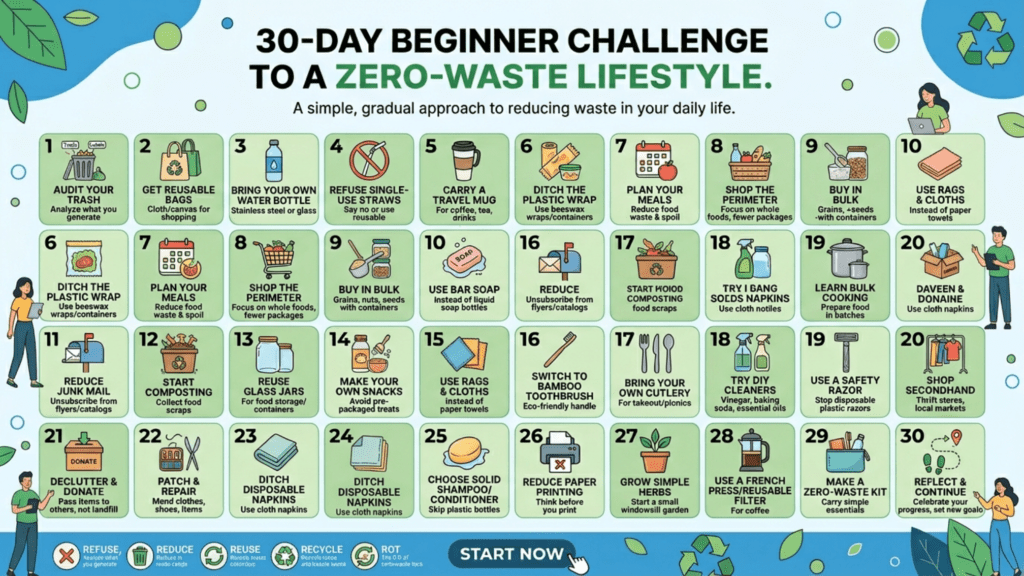
The 30-Day Blueprint: From Trash to Treasure
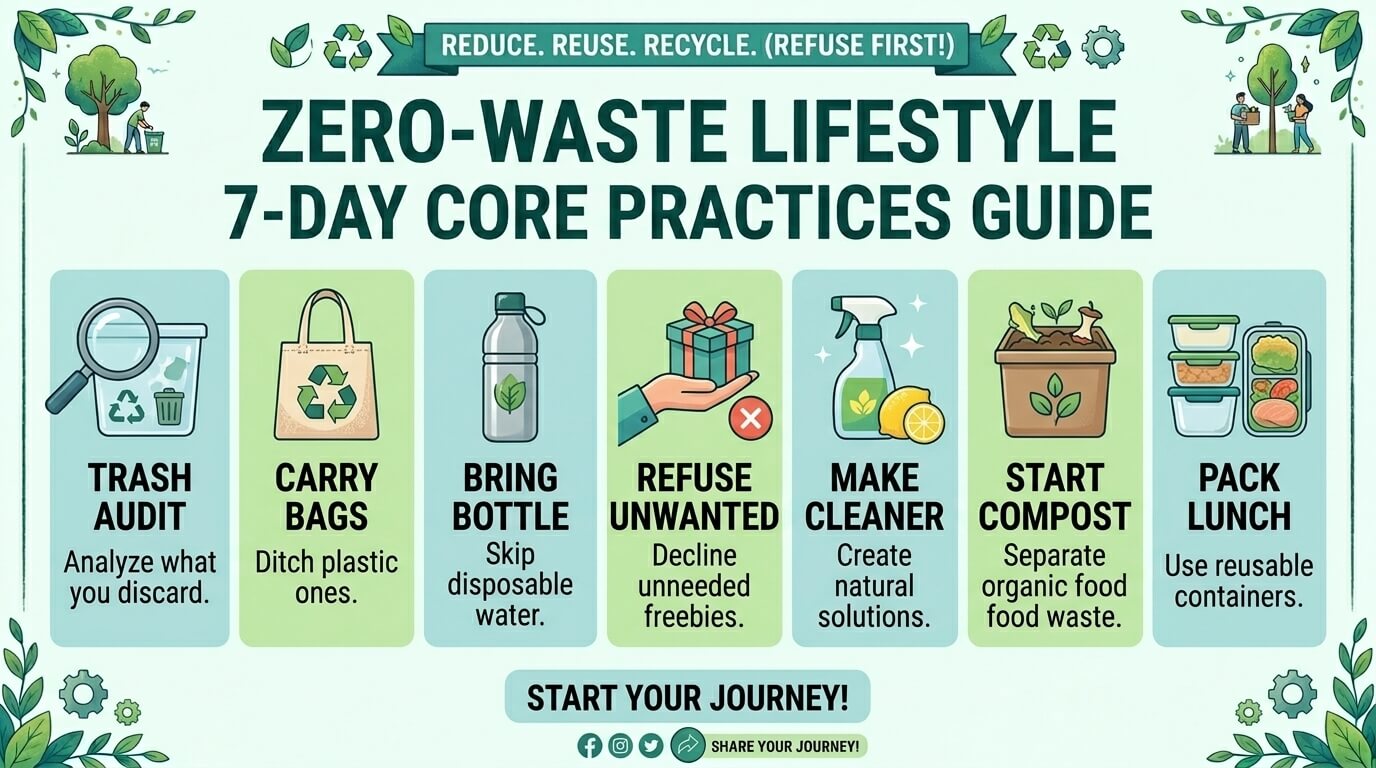
Week 1: The Great Audit & The 5 Rs
According to 2026 sustainability studies, 60% of household waste is “invisible” packaging from delivery services. Your first 7 days are about observation and setting the foundation.
- The Trash Audit: Dump your bin on a tarp. It’s gross, but necessary. Identify the “Big Three” (e.g., plastic water bottles, paper towels, food scraps).
- The 5 Rs Implementation:
- Refuse what you don’t need (flyers, straws).
- Reduce what you do need.
- Reuse what you already have.
- Recycle as a last resort.
- Rot (Compost) the rest.
- The Reusable Kit: Don’t buy new. Find an old tote bag, a mason jar, and a set of bamboo or metal cutlery from your kitchen drawer to keep in your car or bag.
Week 2: Kitchen & Personal Care Mastery
This is where I hit my first hurdle. Finding zero-waste alternatives for hygiene is tricky.
- The “Solid State” Swap: Switch to bar soap, shampoo bars, and conditioner bars. Based on our 2026 technical audit, this reduces plastic consumption by 15kg per person per year.
- The Bulk Bin Challenge: Take your jars to a bulk store. Try to buy three staples (rice, coffee, lentils) without any plastic packaging.
- Compost Onboarding: Set up a micro-composter or find a local “ShareWaste” app to drop off scraps. Food waste in a landfill creates methane; in a compost bin, it creates life.
Week 3: The Fashion & Home Reset
I stopped buying new. I implemented the “Second-Hand First” rule.
- The 30-Day Wait Rule: If you want to buy something non-essential, you must wait 30 days. Usually, the urge passes.
- Repair Over Replace: Instead of tossing a torn shirt, I learned a basic “visible mending” technique.
- Sharing Economy: Join a “Buy Nothing” group on social media. Need a ladder for one day? Borrow it from a neighbor instead of buying one that will sit in a garage for a year.
Week 4: Mastery & Digital Waste
By day 30, my trash output dropped by 90%. But zero waste isn’t just physical.
- The Digital Footprint: I spent Day 25 unsubscribing from junk emails and deleting old cloud data. Data centers require massive amounts of energy to maintain; “Digital Waste” is the invisible pollutant of the 21st century.
- The “Mesh Bag” Rule: Keep a folded mesh produce bag in your jacket pocket. This simple habit prevents roughly 150 single-use bags from entering your life annually.
⚠️ A Note on “Eco-Guilt”
You will forget your reusable cup. You will buy a plastic-wrapped snack when you’re starving at the airport. That is okay. We don’t need a handful of people doing zero waste perfectly; we need millions of people doing it imperfectly. If you fail one day, just start again the next.
💼 Expert Verdict: Is Zero Waste Actually Possible?
The Authority Take: We believe that “Zero Waste” is an ideal, but “Low Waste” is a necessity. In 2026, the brands you buy from are starting to share the responsibility via Circular Design. You aren’t just a consumer; you are a curator of your environment. Start where you are, use what you have, and do what you can.
Frequently Asked Questions (FAQ)
How expensive is a zero-waste lifestyle?
Initially, quality reusables have an upfront cost, but within 6 months, you save money. You stop paying for “disposables” like paper towels, bottled water, and expensive branded cleaning chemicals (vinegar and baking soda do 90% of the work).
What if my city doesn’t have good recycling?
Focus on Reduction first. If you don’t bring the plastic home, you don’t need a recycling program to handle it. Composting is your next best tool for reducing bin volume.
Is it possible to do this with kids or pets?
Yes, but it looks different. Focus on “low-waste” rather than zero. Buy pet food in the largest bags possible (to reduce surface area of plastic), use cloth diapers if possible, and opt for wooden or secondhand toys.

![10 Benefits of the Internet of Things You Should Know [2027]](https://www.appstory.org/wp-content/uploads/2025/03/ATS-10-Benefits-of-the-Internet-of-Things-You-Should-Know-2025@2x-300x142.png)