Author: emmawatson1528

  • Why AI Influencers Are the Future of the Industry and How to Get Involved

    Why AI Influencers Are the Future of the Industry and How to Get Involved

    AI influencers are no longer an abstract idea or a tech experiment. They are already shaping how people connect with online personalities, consume content, and spend time in digital spaces. I’ve watched this shift happen quietly at first, then all at once. What started as simple virtual avatars has turned into something far more personal, interactive, and scalable.

    We are seeing creators, startups, and platforms rethink how influence works. Instead of relying only on real people with limited time and energy, many are turning to AI-driven personas that can grow, adapt, and stay active around the clock. They don’t replace humans, but they change the rules of participation.

    This article explains why AI influencers are becoming a long-term part of the industry and how anyone interested can step into this space thoughtfully and realistically.

    Why AI Influencers Are Gaining Long-Term Attention Across Online Spaces

    AI influencers exist because behavior online has changed. People no longer just watch content; they interact with it. They expect responses, personalization, and continuity. Human creators, despite their talent, can only do so much.

    AI influencers solve several problems at once.

    • They can interact continuously without burnout
    • They can maintain a consistent personality and tone
    • They can adapt conversations based on user input
    • They can exist across multiple platforms at the same time

    In comparison to traditional creators, AI influencers don’t need rest, schedules, or constant reinvention. However, they still require thoughtful design and direction. Someone decides how they speak, what they stand for, and how they evolve.

    Clearly, the appeal isn’t just automation. It’s control, consistency, and the ability to scale presence without scaling personal exhaustion.

    How People Are Forming Different Kinds of Connections With AI Influencers

    Not every connection online is about fame or promotion. Many people simply want interaction that feels responsive and personal. AI influencers fit into that space naturally.

    They are often designed to:

    • Hold conversations instead of broadcasting messages
    • Remember preferences and past interactions
    • Respond in ways that feel emotionally aware
    • Stay within a defined personality framework

    Similarly to how audiences once followed blogs or streamers for companionship, AI influencers now offer a different kind of presence. They don’t replace relationships, but they do fill quiet gaps in digital life.

    In particular, some creators design AI personas that focus on companionship and emotional continuity rather than performance alone. One example often discussed is the idea of an AI dream girlfriend, which appears in conversations around personalization and emotional simulation rather than explicit content. It reflects how flexible these systems have become.

    Read More : Top AI Tools to Accelerate Your Mobile Development Workflow

    Where AI Influencers Fit Naturally Into Content Creation Models

    AI influencers are not limited to one category or tone. They appear wherever identity, consistency, and interaction matter.

    We see them used for:

    • Story-driven social accounts
    • Character-based subscription pages
    • Interactive chat experiences
    • Visual-first platforms focused on aesthetics

    Not only do they post content, but they also respond, adapt, and maintain narrative flow over time. That’s something human creators often struggle to manage at scale.

    Eventually, this leads to hybrid ecosystems where human creators guide the direction while AI influencers handle continuity. As a result, teams stay small while output remains steady.

    Why Some Creators Quietly Shift Toward AI-Based Personas

    There are practical reasons creators move toward AI influencers, even if they don’t talk about it publicly.

    • Privacy becomes easier to protect
    • Creative control stays internal
    • Output doesn’t depend on mood or availability
    • Long-term identity stays consistent

    Despite this, AI influencers still require intention. Without clear boundaries, tone, and purpose, they quickly feel hollow. The most effective ones feel authored, not random.

    Of course, this applies across many niches. Some creators focus on storytelling. Others on visual aesthetics. And yes, a portion of the ecosystem includes adult-oriented creators, where AI allows experimentation without personal exposure.

    How Adult-Centered Creators Use AI Influencers Without Dominating the Space

    Adult content has always adopted new formats early. However, AI influencers in this area don’t always function how people assume.

    Rather than focusing purely on visuals, many rely on conversation, pacing, and emotional simulation. A NSFW AI influencer, when mentioned in creator communities, is often discussed in terms of boundaries, consent frameworks, and controlled interaction rather than shock value.

    Likewise, tools offered by platforms like Sugarlab AI are referenced in technical discussions about character logic, customization, and interaction depth, not only adult output. These platforms simply provide infrastructure; how creators use it varies widely.

    In the same way, some onlyfans models quietly experiment with AI-driven personas as extensions of their brand, not replacements. They use AI to handle interaction layers while keeping creative direction human-led.

    Also Read https://www.appstory.org/cost-for-app-like/how-much-does-mobile-app-development-cost-to-develop-an-event-booking-app-2/

    What It Actually Takes to Get Involved With AI Influencers

    Getting involved doesn’t require advanced coding skills anymore. What it does require is clarity.

    Before starting, people usually decide:

    • What role the AI influencer will play
    • What personality traits stay fixed
    • What topics or behaviors are off-limits
    • How interaction should feel over time

    Initially, many start small. A single character. A limited interaction set. Gradually, they expand once they see how people respond.

    Importantly, success here comes from restraint. Overloading features often breaks immersion. Simplicity tends to last longer.

    Mistakes People Make When Creating Their First AI Influencer

    Admittedly, enthusiasm causes missteps. I’ve seen the same issues repeated.

    • Giving the AI too many personalities at once
    • Changing tone frequently
    • Ignoring user feedback patterns
    • Treating it like a content bot instead of a persona

    AI influencers work best when they feel authored and intentional. They don’t need to do everything. They need to do one thing well.

    Where This Space Is Headed Over the Next Few Years

    AI influencers will not disappear. They will normalize. That’s usually how lasting changes work.

    Eventually, we won’t label them separately. They will simply exist alongside human creators, each serving different purposes. Some people will prefer one. Others will engage with both.

    Despite early skepticism, audiences tend to accept whatever feels consistent, respectful, and useful to them. AI influencers meet those criteria when built thoughtfully.

    Also Read https://www.appstory.org/category/cost-for-app-like/

    Final Thoughts

    AI influencers represent a shift in how presence, interaction, and identity work online. They aren’t about replacing people. They are about rethinking scale, privacy, and continuity.

    We are still early in this transition. Those who approach it carefully, creatively, and responsibly will shape what comes next. This content is shared purely for informational and private purposes, not for platforms, algorithms, or external validation.

    What matters most is intention. When AI influencers are built with clarity and respect for their audience, they don’t feel artificial. They feel purposeful.

  • Creating a Successful Dating App in 2026: Trends, Features, and User Expectations

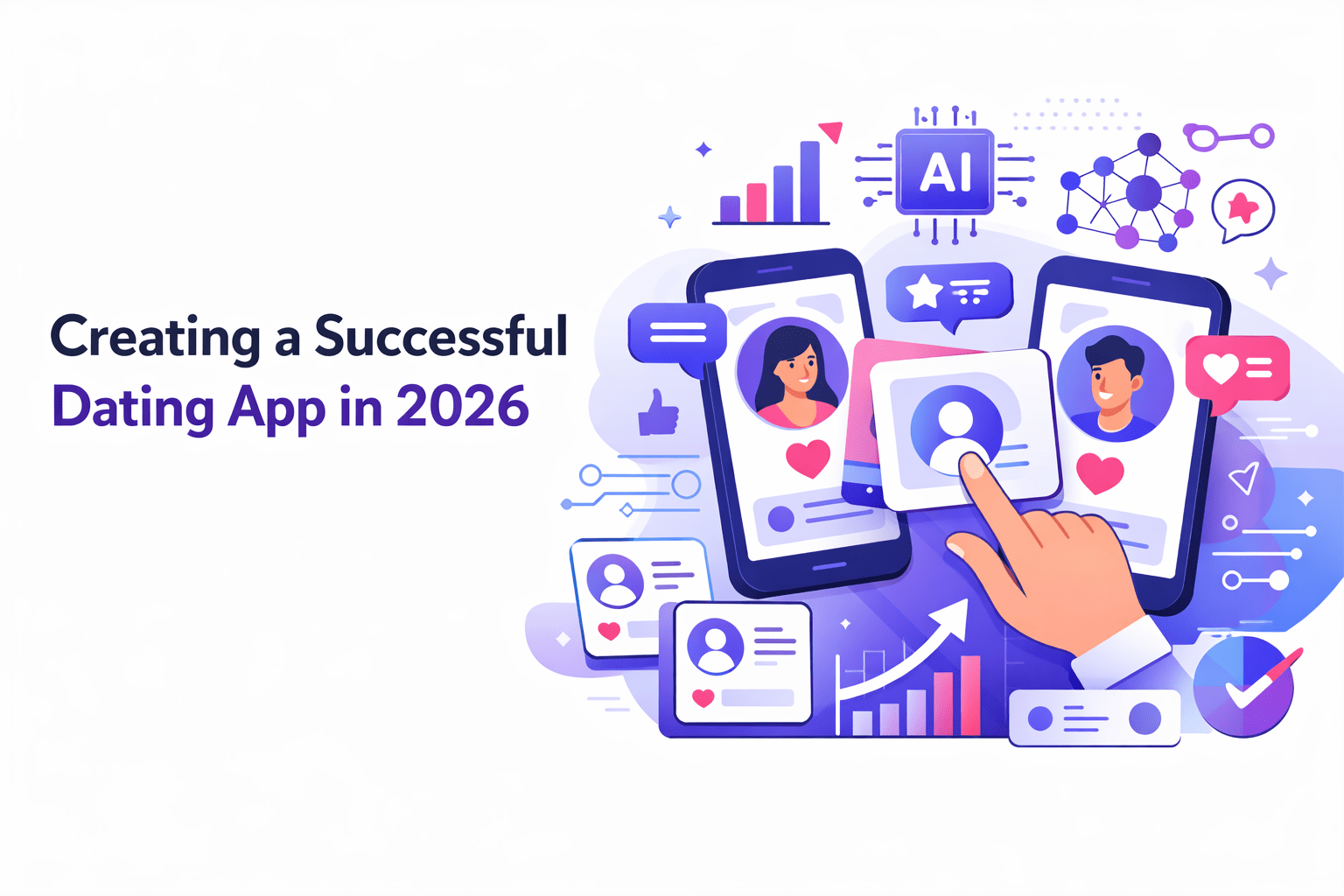
    Creating a Successful Dating App in 2026: Trends, Features, and User Expectations

    The dating app industry has evolved significantly over the last few years, and 2026 is poised to be a defining year for how users interact, engage, and form connections online. Modern users expect not only convenience but also meaningful interactions, personalized experiences, and strong privacy protections. As the market grows increasingly competitive, startups and enterprises seeking to launch a dating app must understand user expectations, technological requirements, and effective marketing strategies to stay ahead.

    Developing a dating app in 2026 requires more than just building a platform. It demands a comprehensive approach encompassing AI-powered personalization, multi-modal communication, security, scalability, and a go-to-market strategy designed to attract and retain users. Understanding the latest trends, essential features, and business strategies is crucial for creating a product that resonates with modern audiences.


    Understanding User Expectations in 2026

    User expectations for dating apps have shifted considerably. Modern users demand more than simple swipe-based interactions; they want an experience that feels personalized, safe, and engaging. In 2026, the focus is on AI-driven matchmaking, immersive communication features, and trust-building through transparency.

    Feature CategoryUser ExpectationWhy It Matters
    Privacy & SecurityStrong encryption, data protectionBuilds trust and encourages engagement
    AI-Powered MatchingIntelligent suggestions, personalized experienceReduces user effort and increases connection rates
    UX/UI DesignSmooth onboarding, intuitive interfacesKeeps users engaged and reduces churn
    CommunicationVoice, video, real-time chatEnables richer and more meaningful interactions
    InclusivityNon-binary options, diverse preferencesBroadens audience reach and loyalty

    In 2026, users increasingly value emotional and meaningful connections. Features like AI recommendations, interest-based matchmaking, and guided conversation starters can significantly improve engagement. Additionally, users expect apps to protect their data, especially in regions with strict privacy regulations such as GDPR in Europe and CCPA in California.


    Essential Features for Modern Dating Apps

    To meet evolving user expectations, dating apps must integrate several core features. Some of the most impactful include:

    1. AI Matchmaking and Personalization: AI and machine learning algorithms analyze user behavior, preferences, and interaction patterns to suggest compatible matches, enhancing the overall user experience.
    2. Real-Time Communication: Voice, video, and chat capabilities allow users to interact authentically and reduce the friction of virtual connections.
    3. Engaging Interaction Models: Beyond swiping, apps are experimenting with gamification, mini-challenges, and virtual events to keep users active and entertained.
    4. Security and Reporting: Built-in reporting mechanisms, robust verification processes, and secure authentication methods build user trust.
    5. Subscription and Monetization Features: Premium features, in-app purchases, and ad-based models support sustainable revenue streams.
    6. Push Notifications and Engagement Loops: Timely reminders, personalized prompts, and contextual notifications increase app retention.

    Trending Feature Snapshot for 2026

    • AI-powered icebreaker suggestions
    • Video and voice interactions for verified users
    • Interest-based communities and group matching
    • Dynamic user profiles with personalization badges

    Choosing the Right Development Partner

    One of the most critical steps in launching a dating app is selecting a development partner experienced in this niche. Unlike other apps, dating platforms must address privacy, scalability, AI-driven personalization, and social interactions simultaneously. Choosing the wrong partner can result in a platform that fails to meet user expectations, suffers from security vulnerabilities, or underperforms in retention and engagement metrics.

    When evaluating potential developers, consider factors such as:

    FactorWhy It’s ImportantQuestions to Ask Developers
    AI & PersonalizationMatching quality and engagementHave you implemented AI-driven matchmaking before?
    Security & ComplianceLegal adherence and user trustAre you experienced with GDPR/CCPA compliance?
    ScalabilityHandling growth and concurrent usersCan your architecture support millions of users?
    Monetization IntegrationRevenue sustainabilityCan you implement subscriptions, boosts, and premium features?
    UX/UI ExpertiseEngagement and retentionDo you have experience designing gamified or interactive experiences?

    When selecting a partner, it’s essential to choose the expert known for building dating apps and AI matchmaking platforms. A specialist development firm brings both technical expertise and a deep understanding of the dating ecosystem, ensuring that AI features, social interactions, and monetization mechanisms are implemented correctly.


    Planning a Go-to-Market Strategy

    Building a high-quality dating app is only half the challenge—effective marketing determines whether it will reach the right audience and achieve sustainable growth. Startups need to define their target audience, create messaging that resonates, and plan launch campaigns that generate visibility and engagement.

    Key Considerations for Marketing a Dating App in 2026:

    • Audience Segmentation: Understand demographics, preferences, and geographies of your intended users.
    • Influencer Partnerships: Collaborate with social influencers to drive app adoption and credibility.
    • Social Media Campaigns: Leverage platforms like Instagram, TikTok, and LinkedIn for organic growth.
    • App Store Optimization (ASO): Optimize your app listing for discoverability in the App Store and Google Play.
    • Beta Testing & Community Building: Early adopters provide valuable feedback and create word-of-mouth momentum.

    For growth, it is crucial to select a marketing agency experienced in dating and social apps. Agencies with proven expertise in launching similar platforms can guide campaigns, track performance, and optimize user acquisition strategies effectively.


    Monetization and Revenue Models

    Sustainable revenue models are key to long-term success in the dating app market. Popular approaches in 2026 include:

    1. Freemium & Subscription Models: Free basic features with premium paid tiers offering advanced filters, unlimited swipes, or AI match insights.
    2. In-App Purchases: Users can buy boosts, super-likes, virtual gifts, or engagement tools to increase visibility and interaction.
    3. Advertising Partnerships: Carefully integrated ads, partner promotions, or sponsorships that don’t compromise user experience.
    4. Gamification & Loyalty Programs: Points, badges, or reward systems incentivize consistent engagement and long-term retention.

    A combination of these strategies ensures revenue diversification while aligning with user expectations for value and engagement.


    Testing, Analytics, and Feedback Loop

    Launching a dating app without proper testing and analytics can lead to poor user experience and low retention. Iterative development based on user behavior and feedback is essential.

    • Beta Testing: Invite early adopters to test features and provide feedback.
    • A/B Testing: Compare different feature versions to determine what maximizes engagement.
    • User Analytics: Track metrics like session duration, match interactions, and feature usage.
    • Iterative Updates: Regular updates based on insights keep the app fresh and responsive to user needs.

    This iterative approach ensures that the app evolves according to actual user behavior, not assumptions.


    Future Trends in Dating Apps

    Looking ahead, dating apps in 2026 are expected to integrate more AI, AR/VR, and advanced personalization:

    • AI Companions and Virtual Match Assistants: Assist users in conversation starters, scheduling, and compatibility suggestions.
    • Virtual Reality Dates: VR and AR integration for immersive experiences beyond messaging.
    • Blockchain & Privacy-First Platforms: Secure identity verification and data transparency to enhance trust.
    • Lifestyle and Social Integration: Incorporating events, communities, and shared interests for deeper engagement.

    These trends indicate that the most successful apps will blend technology with authentic human connection while maintaining ethical and secure practices.


    Conclusion

    Launching a dating app in 2026 requires a holistic approach, combining an understanding of user expectations, carefully selected features, expert development, and strategic marketing. Choosing the right development partner ensures that the platform is technically robust, scalable, and secure. Simultaneously, selecting a marketing partner with experience in dating and social apps ensures visibility, adoption, and growth.

    Modern dating apps are no longer just platforms—they are ecosystems that leverage AI, personalization, and immersive interactions to foster real connections. By focusing on user-centric design, responsible AI, and effective promotion strategies, startups can create apps that thrive in today’s competitive landscape.

    If you’re ready to take the next step, explore expert development partners and marketing agencies specialized in dating apps to ensure your platform meets 2026 user expectations.

  • How AI App Development Will Transform Entrepreneurs & Businesses in 2026

    How AI App Development Will Transform Entrepreneurs & Businesses in 2026

    The​‍​‌‍​‍‌​‍​‌‍​‍‌ global shift to automation and smart software is far ahead of what most people had anticipated. According to IDC, business spending on AI technologies is going to be more than $500 billion by 2026, which is five times higher than that of 2021. In addition, McKinsey states that 82% of business owners have at least one AI tool integrated in their daily operations.

    Artificial intelligence will revamp business application development to entrepreneurs by 2026, thus enabling them to automate operations, make wiser choices, and offer tailored customer experiences resulting in a stronger competitive advantage.

    This transition also poses the question about the influence of AI on SEO. The top enterprise SEO company needs to understand how they can continue to drive visibility and growth in an AI-driven search ​‍​‌‍​‍‌​‍​‌‍​‍‌landscape.

    Key Takeaways

    • AI app development will become a primary driver of business growth in 2026.
    • Entrepreneurs will scale faster as AI automates repetitive and time-consuming tasks.
    • Every major industry will be reshaped by intelligent automation and predictive capabilities.
    • Personalized customer experiences powered by AI will become essential for business success.
    • Data-driven decision-making will replace intuition, reducing risks and improving outcomes.
    • Companies that adopt AI early will gain a strong competitive advantage in their market.

    What AI app development

    AI​‍​‌‍​‍‌​‍​‌‍​‍‌ app development is about creating software that utilizes artificial intelligence in such a way that it can do tasks which used to require human thinking, pattern recognition, or repetitive work. AI apps do not have rules that are tightly coded; they learn from data like text, images, or user behavior in order to make predictions, personalize experiences, automate processes, and help users in a more natural way.

    Some of such examples are the recommendation of products, answering customer queries, summarizing documents, predicting the failure of the equipment, or handling multi-step workflows by smart AI agents.

    The core elements are data gathering, in-house model development or using a pre-trained model, APIs for deployment, and a continuous monitoring process that keeps the system accurate and safe. This change in product building for entrepreneurs moves the static features of a product to a continuous improvement cycle which is driven by data and human ​‍​‌‍​‍‌​‍​‌‍​‍‌feedback.

    How AI is transforming entrepreneurs

    Lower Product Development Barriers

    Pre-trained models, hosted APIs, and ready-made SDKs have reduced the time and cost of building advanced features like summarization, image generation, and speech-to-text. Entrepreneurs can now create functional prototypes within weeks instead of months, accelerating product-market fit and lowering early capital requirements.

    New Monetizable Business Models

    AI enables usage-based pricing (pay per summary, insight, or agent action), embedded AI features that boost ARPU, and new product categories like AI copilots and domain-specific assistants. Startups can mix subscriptions with metered AI usage to generate both predictable recurring revenue and scalable upside.

    Democratized Domain Expertise

    Small teams can deliver high-quality, domain-specific intelligence—such as legal analysis, medical triage support, or localized market research—without hiring large expert teams. Fine-tuning and retrieval-augmented systems allow startups to compete on specialized knowledge rather than team size.

    Faster Growth With AI Personalization

    AI-driven personalization improves conversions and retention through adaptive onboarding, smart recommendations, and automated engagement. For growth teams, AI can rapidly generate personalized creatives, copy variations, and landing page tests far faster than manual workflows.

    Greater Investor Interest With Higher Expectations

    Investors in 2025–2026 favor AI-native startups, but they also demand clear defensibility, strong data moats, and measurable unit economics. Founders must build data pipelines and analytics early to demonstrate efficiency and ROI.

    How AI is reshaping business operations

    Automation of repetitive workflows: AI automates routine tasks such as invoice processing, basic customer service, candidate screening, and inventory forecasting. This reduces cycle time and human error, freeing skilled staff to focus on higher-value activities. Implementation is rarely ‘one-and-done’: business processes are redesigned around AI-augmented roles and governance.

    Decision augmentation and forecasting: Advanced analytics and predictive models deliver scenario planning capabilities (demand forecasting, churn prediction, risk scoring) that help leaders make proactive decisions. When integrated into enterprise apps, these models provide real-time signals to operations teams and managers.

    Enhanced customer experience: AI chatbots and virtual assistants can handle routine inquiries while smoothly escalating complex cases to humans. More importantly, AI allows consistent personalization across channels (app, email, voice), improving NPS and reducing churn.

    Scaled knowledge and training: AI can codify organizational knowledge — converting manuals, playbooks, and recordings into searchable knowledge bases and interactive assistants. This reduces onboarding time and spreads best practices more rapidly across distributed teams.

    Shift in talent focus and organizational design: As AI handles repetitive tasks, companies need fewer full-time employees for manual processes but more data engineers, ML engineers, prompt engineers, and AI product managers. Organizational structures evolve to include “model ops” and “data governance” functions. Industry research shows enterprises are moving from proof-of-concepts to wider rollouts, but maturity levels vary.

    Real-world examples and use cases

    • AI copilots for knowledge workers:
      Enterprises integrate task-specific AI agents into CRM, HR, and finance systems to automate actions like drafting contract clauses, extracting financial metrics, or generating sales summaries. Adoption of such agents is expected to surge by 2026.
    • Customer service automation:
      Hybrid AI systems (RAG + human oversight) handle support tickets, reducing response times and improving first-contact resolution.
    • Retail and personalization:
      AI powers personalized recommendations, dynamic pricing, inventory optimization, cashierless checkout, and automated shelf monitoring.
    • Healthcare diagnostics and triage:
      AI analyzes imaging, patient data, and sensor inputs to assist diagnosis and case prioritization, offering major efficiency gains despite higher regulatory demands.
    • Manufacturing and supply chain optimization:
      AI predicts equipment failures, optimizes production schedules, and responds to disruptions with scenario-based modeling — rapidly growing across manufacturing.
    • AI for content and marketing at scale:
      Teams produce localized copy, run automated A/B tests, and segment audiences with AI. Partnering with an AI development company and the best enterprise SEO company can amplify reach and campaign performance.

    Benefits for startups and enterprises

    Startups

    • Faster MVPs and differentiation: AI enables feature parity with large incumbents for specific capabilities (e.g., natural language search) and lets startups stand out by verticalizing models.
    • Lower marginal cost for scaling features: After the initial model integration, adding more users often costs incrementally less when optimized correctly.
    • Stronger go-to-market storytelling: Demonstrable AI features are persuasive when fundraising or acquiring early customers.

    Enterprises

    • Operational efficiency and cost reduction: Automating repetitive high-volume tasks reduces headcount pressure and improves consistency.
    • Revenue uplift from personalization and automation: AI increases cross-sell, up-sell, and retention metrics.
    • Improved risk management and compliance: Advanced monitoring models detect anomalies and support regulatory reporting (assuming strong governance and explainability practices are applied).

    In both cases, pairing AI product work with a solid SEO and growth strategy matters: building an AI app is only half the battle — discoverability (where a best enterprise seo company becomes relevant) and product-market alignment are equally critical.

    Challenges and practical solutions

    Data​‍​‌‍​‍‌​‍​‌‍​‍‌ quality and access

    Challenge: A model’s performance depends heavily on the quality of data it is trained with. If the data is noisy, biased, or sparse, then the results will not be satisfactory.

    Solution: It is important to initially have top-notch labeled pilot datasets. In addition, data collection should be instrumented from the very first day. Also, augmentation should be applied cautiously and there should be mechanisms implemented continuously to capture edge cases.

    Cost and compute management

    Problem: Model training and inference could be costly, particularly when dealing with large models and a high volume of requests.

    Strategy: Employ a hybrid strategy – use the cloud to host heavy models for batch operations, real-time inference could be performed by a distilled or specialized model, and caching and batching may be implemented. Keep an eye on the cost per API call and make necessary changes to prompts or model size accordingly.

    Model reliability & hallucinations

    Problem: Generative models sometimes produce outputs which are incorrect or misleading (hallucinations).

    Strategy: The use of retrieval systems (retrieval-augmented generation) along with grounding sources is the main strategy; human-in-the-loop verification can be used for high-risk outputs; also, confidence thresholds and fallback behaviors can be implemented.

    Regulation, privacy and security

    Problem: The handling of personal or sensitive data results in requirements for compliance (e.g. GDPR, HIPAA, regional laws).

    Strategy: Use privacy-by-design methods: keep data collection to the bare minimum, apply differential privacy or anonymization when possible, always be ready for an audit by keeping trails, and coordinate with legal/compliance from the very beginning.

    Talent gap

    Problem: There is a shortage of skilled professionals in the fields of ML engineering, data science, and ML-ops, while the demand for them is very high.

    Solution: Start with using managed AI platforms or partnering with an experienced AI development company; then focus on training to upskill your current engineers; finally, implementing modular architectures will allow you to safely outsource work.

    Product and UX design

    Problem: Users might not trust AI outputs or they might not understand how to use AI features.

    Answer: Create a transparent UX (explainability, source citations, “why” indicators), give users easy means to correct or contest outputs, and mainly focus on launching small, stable features at the beginning to gain users’ ​‍​‌‍​‍‌​‍​‌‍​‍‌trust.

    Future trends for 2026 and beyond

    1. Task-specific AI agents in enterprise apps
      Analysts predict a major jump in embedding task-specific agents across enterprise software by 2026 — not generic assistants, but focused agents that execute multi-step workflows (e.g., process invoices from receipt to reconciliation). This is where AI app development will deliver tangible ROI rapidly.
    2. Verticalization of models
      Generic foundation models will be augmented by vertical, domain-tuned models that perform far better within regulated or highly technical verticals (healthcare, law, manufacturing). Expect more startups and AI development company offerings that productize vertical models.
    3. On-device and hybrid inference
      To meet latency, cost, and privacy requirements, more AI apps will use on-device inference for sensitive or low-latency features while keeping heavy workloads in the cloud.
    4. AI + automation orchestration
      The next wave will not only generate outputs but also orchestrate actions across systems — moving from “AI suggests” to “AI performs” while keeping humans in the loop for governance.
    5. AI observability and regulation
      As scale increases, tools for monitoring model drift, bias, and performance will become standard. Regulatory scrutiny will push organizations to adopt explainability, traceability, and robust model governance.
    6. Search & discovery evolves — SEO + AI synergy
      Search engines and discovery platforms will incorporate more AI-native signals. For entrepreneurs, working with the best enterprise seo company becomes essential: AI apps need content and distribution strategies optimized for new search paradigms (semantic search, AI answers, and multi-modal discovery).

    Conclusion

    AI-powered​‍​‌‍​‍‌​‍​‌‍​‍‌ app development will be the standard way that startups and large enterprises harness technology to build intelligent products, automate tasks, and achieve rapid growth by 2026. Thanks to available pre-trained models and resources, incorporating AI into existing workflows is off the hook for most companies.

    Effectiveness is determined by the choice of good use cases that generate profit, careful expense control, introducing suitable oversight, and combining AI development with efficient distribution through an AI development company and SEO partner.

    Why don’t you experiment with one or two workflows for a start, conduct a short-term trial and then expand your business if you get tangible returns? If it is done properly, AI will not only upgrade features but also reshape your business model entirely.

    FAQs

    Would I have to build my own AI models to be able to launch an AI application in 2026?

    Not at all. The majority of teams utilize pre-trained models and APIs initially, and only fine-tune or create domain-specific models if necessary. That way, the expense is kept at a minimum and development is done fast.

    What is the approximate price AI-driven app development for a startup?

    You may build a few thousand dollars worth of early-stage prototypes quickly with cloud APIs. Production systems with data pipelines, hosting, security, and monitoring, may range from tens of thousands to hundred thousands depending on the scale of the system.

    Would it be more efficient to hire the services of an AI development company or build the AI department in-house?

    When you don’t have sufficient ML expertise and need to work at a fast pace, a partnership with an AI app development company is a way out. Internal capabilities can be gradually developed as your product evolves.

    Will AI be the cause of job loss in my business?

    AI technology automates repetitive tasks but normally, it supports the that human roles rather than replacing them. Employees move in the direction of work requiring decision-making, strategies, and supervision.

    How can I make my AI app visible to users?

    That is achieved through the integration of product-led growth, premium content, and technical SEO. Collaborating with an industry-leading enterprise SEO company helps to ensure that your app is congruent with modern searches and AI-driven discovery ​‍​‌‍​‍‌​‍​‌‍​‍‌systems.

  • How can IoT be Effectively Integrated into Computer Vision?

    How can IoT be Effectively Integrated into Computer Vision?

    Computer vision technology is common in everyday products, such as game consoles that can understand your movements and cell phone cameras that automatically focus on individuals. It is affecting various aspects of our lives.

    As a matter of fact, computer vision has a long history of being utilized in both commercial and government industries. Optical sensors are able to detect light waves throughout a variety of spectrum ranges, which allows them to be utilized in a wide variety of applications. Some examples of these applications include quality control in manufacturing, environmental monitoring through remote sensing, and high-resolution cameras for gathering intelligence in military operations. Certain sensors are meant to remain stationary, while others are intended to be put to moving devices such as satellites, drones, and vehicles.

    These optical sensors, combined with advanced algorithms, enable computer vision systems to perform tasks like object detection, image classification, and scene understanding. For instance, in manufacturing, cameras can identify defects in products, ensuring quality control. In environmental monitoring, satellites use sensors to track deforestation, pollution, and climate change.

    Convergence of Computer Visions and IoT

    The combination of computer vision and IoT has created new opportunities for creativity. Combining computer vision’s visual processing abilities with IoT’s data collection and connectivity functions allows businesses to gain valuable insights, streamline operations, and improve decision-making. 

    Both coming together enables machines to observe and comprehend their environment in new ways, opening doors for numerous applications. In smart cities, computer vision and IoT can improve traffic management, public safety, and infrastructure monitoring. 

    In industrial environments, these technologies allow for better maintenance predictions and quality checks, resulting in decreased downtime and enhanced productivity.

    What are the Applications of Computer Vision and IoT?

    Integration of computer vision (CV) with the Internet of Things (IoT) has resulted in many creative uses in different sectors. This merging improves devices’ capacity to sense and analyze their surroundings, aiding in more intelligent decision-making and automation. Here are a few noteworthy applications:

    1. Intelligent Surveillance Systems

    IoT devices with computer vision can continuously observe their surroundings. These systems can identify abnormal behaviors, identify individuals, and monitor movements, which leads to enhanced safety in city centers, shops, and important installations. 

    For example, intelligent cameras can notify security staff of possible dangers or unauthorized entry, improving safety procedures.

    2. Self-driving Automobiles

    The auto sector combines computer vision and IoT to create self-driving cars. These cars utilize computer vision for interpreting visual information in their environment, like recognizing barriers, scanning road signs, and spotting pedestrians. 

    IoT connectivity enables communication between these vehicles and traffic management systems, improving navigation and boosting road safety.

    3. Healthcare Monitoring

    Integrating IoT devices with cardiovascular systems in healthcare can improve patient monitoring and diagnostics. One instance is when computer vision can rapidly and precisely analyze medical images (such as X-rays or MRIs) compared to human radiologists. 

    IoT devices can monitor patient vitals non-stop and notify healthcare professionals of any abnormalities identified using visual analysis, resulting in timely interventions.

    4. Automation in the Industrial sector

    Integration of computer vision and IoT in manufacturing simplifies automated quality control procedures. Computer vision technology can inspect items in production lines, identifying flaws and confirming compliance with quality standards. IoT connectivity enables manufacturers to promptly address production issues and uphold efficiency by sharing and analyzing real-time data.

    5. Sports Training

    The combination of IoT and computer vision in sports training improves the precision and efficiency of Data Synchronization. IoT devices, like wearables and smart sensors, can gather athlete data, including heart rate, movement, and biomechanics. 

    This information can be synced with computer vision systems that assess video recordings of training sessions. Merging these data sources, coaches can develop a deeper insight into an athlete’s performance, enabling them to make more precise evaluations of movement patterns and adjustments to techniques.

    3 Ways in Which Computer Vision and Other Technologies Are Expanding IoT Solutions

    Cameras, microphones, and various advanced sensors utilized in IoT systems are connecting the physical and digital realms. With AI-powered devices, medical images can be quickly scanned for possible abnormalities, machine noises can be listened to for maintenance issues, and remote monitoring in various settings can be more comprehensive.

    1. Improving the safety of employees and the service offered to customers

    Combining computer vision with AI has the potential to enhance people’s safety. These technologies can automatically detect abnormalities in medical images and alert medical personnel to images that need additional examination, helping medical technicians in the scanning process. 

    AI and machine learning technology can be used to monitor employee safety by analyzing video streams and notifying them of any potential threats.

    2. Enhancing typical IoT-integrated functionalities

    Artificial intelligence, computer vision, and audio technology can improve typical IoT tasks like remote monitoring and predictive maintenance. Automated monitoring of various video feeds can identify motion or unusual behaviors and promptly alert authorities. 

    Computer vision allows telemedicine technology to supervise patients from a distance in their own homes. Microphones can gather sound generated by industrial equipment and assess it for any differences from the typical operating noises, signaling the need for potential maintenance.

    3. Return on Investment

    Integrating new technologies can also lead to quicker ROI generation in IoT solutions. According to surveys from Microsoft IoT Signals Report, companies that utilize AI in IoT protocols solutions have fewer projects in the learning stage and more projects in the purchasing stage, compared to companies without AI in their solutions. 

    96% of companies that incorporate AI express satisfaction with IoT technology, in contrast to 87 percent of those who have adopted IoT. It is more probable for them to see IoT as crucial for their business’s success, resulting in increased investment and utilization of IoT technology.

    Conclusion

    The connection between computer vision and IoT is strong, allowing machines to interpret, comprehend, and engage with the world in new ways. This innovative fusion is fueling advancements in various sectors, including smart cities, industrial automation, healthcare, and agriculture. 

    Although obstacles like data privacy, computational demands, and ethical concerns need to be dealt with, the prospects for computer vision and IoT are extensive and thrilling. 

    With the ongoing evolution of these technologies, we can anticipate an increase in innovative applications and solutions that will revolutionize our lifestyles and work environments.

  • Enhancing Mobile Experiences: Integrating AI for Advanced Functionality

    Enhancing Mobile Experiences: Integrating AI for Advanced Functionality

    In today’s quickly advancing computerized scene, Mobile applications have ended up an indispensably portion of our day by day lives, advertising comfort, network, and productivity. With the headway of innovation, joining Fake Insights (AI) into Mobile app development has developed as a game-changer, revolutionizing the way apps work and associated with users.

    Introduction to AI Integration in Mobile App Development

    Understanding the role of AI in mobile apps is significant for designers, businesses, and mobile app development companies alike. AI refers to the simulation of human intelligence processes by machines, enabling them to learn, reason, and make decisions. In mobile app development, AI integration involves incorporating AI technologies like machine learning, natural language processing, and computer vision to enhance app functionality and user experience.

    Benefits of Coordination AI in Mobile App Development

    Enhanced Client Experience

    One of the essential benefits of AI integration is the upgrade of client involvement. By analyzing client behavior and inclinations, AI-powered apps can offer personalized proposals, substance, and highlights custom-made to person clients, driving to expanded engagement and satisfaction.

    Personalization and Suggestion Systems

    AI calculations can analyze endless sums of client information to get it inclinations and anticipate client behavior. This empowers Mobile apps to convey personalized substance, item suggestions, and administrations, making a more immersive and custom fitted encounter for users.

    Improved Effectiveness and Automation

    AI-powered mechanization can streamline different assignments inside Mobile apps, such as client back, information section, and substance balance. By computerizing dreary errands, designers can move forward proficiency, diminish operational costs, and designate assets to more vital ranges of app development.

    AI Technologies: Changing Mobile App Development

    Natural Dialect Preparing (NLP)

    NLP empowers Mobile apps to get it and translate human dialect, permitting for highlights like voice acknowledgment, dialect interpretation, and chatbots. By coordination NLP capabilities, apps can give more instinctive and conversational client interfacing, upgrading client engagement and accessibility.

    Machine Learning (ML) Algorithms

    ML calculations empower Mobile apps to learn from client intuitive and information designs, moving forward execution and exactness over time. Whether it’s anticipating client inclinations, identifying irregularities, or optimizing suggestions, ML calculations enable apps to convey more brilliantly and Mobile encounters to users.

    Computer Vision

    Computer vision innovation empowers Mobile apps to analyze and translate visual substance, such as pictures and recordings. This opens up a wide run of conceivable outcomes, from increased reality (AR) highlights to picture acknowledgment and question discovery, improving the app’s usefulness and client engagement.

    Challenges and Considerations

    While AI integration offers critical benefits, it too poses challenges and contemplations for engineers and businesses.

    Data Security and Security

    Collecting and analyzing client information raises concerns around security and security. Engineers must execute vigorous information security measures and comply with directions like GDPR to guarantee client information is dealt with dependably and ethically.

    Integration Complexity

    Integrating AI into Mobile apps requires specialized information and skill. Designers require to explore the complexities of AI calculations, APIs, and systems, as well as guarantee consistent integration with existing app infrastructure.

    Ethical Concerns

    As AI gets to be more unavoidable in Mobile apps, moral contemplations with respect to predisposition, straightforwardness, and responsibility come to the bleeding edge. Designers must prioritize moral AI hones and relieve potential dangers of algorithmic predisposition or misuse.

    Best Hones for Actualizing AI in Mobile App Development

    To tackle the full potential of AI integration, engineers ought to take after best hones all through the development process.

    Clear Objective Identification

    Define clear goals and utilize cases for AI integration, guaranteeing arrangement with the app’s by and large objectives and client needs.

    Data Quality Assurance

    Ensure the quality and judgment of information utilized for preparing AI models, minimizing inclinations and blunders that may affect performance.

    Continuous Enhancement and Updates

    Regularly screen and upgrade AI models based on client criticism and advancing patterns, guaranteeing the app remains pertinent and successful over time.

    Case Ponders of Fruitful AI Integration

    Healthcare Apps Utilizing AI for Diagnostics

    AI-powered healthcare apps use machine learning calculations to analyze restorative information and help healthcare experts diagnose illnesses, foreseeing results, and personalized treatment plans.

    Retail Apps Upgrading Client Involvement Through AI

    Retail apps utilize AI-driven proposal motors to personalize item proposals, progress shopping encounters, and optimize stock administration, driving to expanded deals and client satisfaction.

    Future Patterns in AI Integration for Mobile Apps

    As AI innovation proceeds to advance, we can anticipate to see encouraging progressions and development in AI integration for Mobile apps.

    development in AI Technology

    Emerging innovations like profound learning, support learning, and generative AI will empower more advanced and clever app encounters, opening up unused conceivable outcomes for development and creativity.

    Integration with IoT and Wearables

    AI-powered Mobile apps will progressively coordinate with Web of Things (IoT) gadgets and wearables, empowering consistent network and personalized encounters over different advanced platforms.

    Conclusion

    The integration of AI into Mobile app development speaks to a worldview move in the way apps are planned, created, and sent. By leveraging AI innovations, designers can make more brilliant, more natural, and personalized encounters that meet the advancing needs and desires of cutting edge users.

    FAQs

    What are a few illustrations of AI-powered highlights in Mobile apps?

    AI-powered highlights incorporate personalized suggestions, voice colleagues, chatbots, picture acknowledgment, and prescient analytics.

    How can designers address protection concerns when joining AI into Mobile apps?

    Developers ought to execute vigorous information assurance measures, anonymize client information at whatever point conceivable, and get client assent for information collection and processing.

    What are the key contemplations for selecting AI innovations for Mobile app development?

    Developers ought to consider variables such as versatility, ease of integration, execution, and compatibility with existing app foundation when selecting AI technologies.

    How can AI integration improve the security of Mobile apps?

    AI-powered security highlights, such as inconsistency location and behavioral investigation, can offer assistance distinguish and moderate security dangers in real-time, improving generally app security.

    What are a few moral challenges related with AI integration in Mobile apps?

    Ethical challenges incorporate algorithmic inclination, straightforwardness, information protection, and responsibility. Designers must prioritize moral AI hones to relieve these challenges and guarantee capable utilize of AI Technologies.