Tag: Android

  • Google’s digital assistant comes to new Android phones

    Google’s digital assistant comes to new Android phones

    New York: Alphabet Inc’s Google announced on Sunday that it will bring its digital assistant to smartphones running the latest versions of its Android operating system, vastly expanding its reach.

    The Google Assistant was limited to the technology company`s own products when it was released last fall, but it has steadily been expanding to a broader range of devices.

    Smartphones running Android accounted for 85 percent of the global market last year, according to tech research firm IDC, compared to 15 percent for Apple Inc’s iOS.

    The Google Assistant will roll out this week to English speakers in the United States with phones running Android 7.0 Nougat and Android 6.0 Marshmallow, the company said.

    English speakers in Australia, Canada and the United Kingdom will gain access to the assistant next, followed by German speakers in Germany, and the company is working on support for additional languages.

    Voice-powered digital assistants have been largely a novelty for consumers since Apple`s Siri introduced the technology to the masses in 2011. But many in the industry believe the technology will soon become one of the main ways users interact with devices, and Apple, Google and Amazon.com Inc are racing to present their assistants to as many people as possible.

    “Our goal is to make the Assistant available anywhere you need it,” Gummi Hafsteinsson, product lead for the Google Assistant, wrote in a blog post published on Sunday. “With this update, hundreds of millions of Android users will now be able to try out the Google Assistant.”

    Companies ranging from appliance maker Whirlpool Corp to Ford Motor Co announced products featuring Amazon’s Alexa assistant at the Consumer Electronics Show in Las Vegas earlier this year, leading some analysts to conclude the online retailer had gained an early lead over Google.

    What is more, Android manufacturer Huawei Technologies Co announced it would support Alexa, highlighting the cost of Google’s decision to feature the assistant on its own hardware before opening it up to partners, said analyst Jan Dawson of Jackdaw Research.

    “Clearly Google needs to move forward because their battle in the future is not going to be over the operating system, it’s going to be about assistant platforms,” said analyst Bob O’Donnell of TECHnalysis Research.

    Google cannot trust that its assistant will be the default on all devices in the Android ecosystem. Leading manufacturer Samsung Electronics has announced plans for an assistant, and other companies are reportedly working on the technology.

    “Some big manufacturers have decided to go their own way,” Dawson said. “But a lot of manufacturers simply can’t afford to develop their own.”
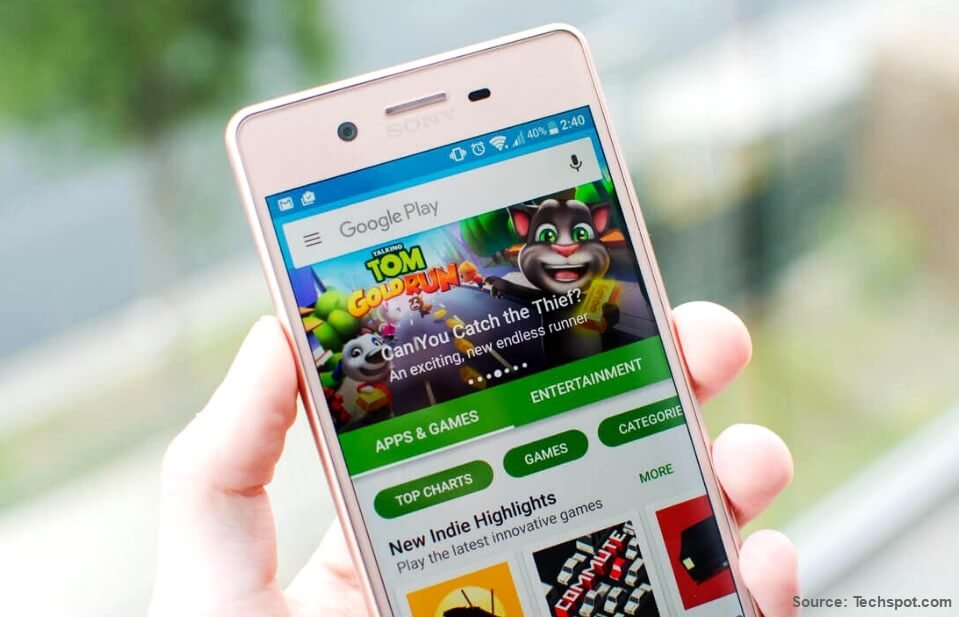
  • Google will soon delete apps with no privacy policies from Play Store

    Google will soon delete apps with no privacy policies from Play Store

    Google is planning to crack down on apps that violate its ‘User Data policy’ and don’t have their own privacy policy. It has started sending out notices to developers asking them to put such a policy in place till March 15, or face the consequences.

    According to The Next Web, which has put out a copy of the notice shared with developers, Google’s email notes if the developers continue to violate its ‘User Data’ policy, the company could “limit the visibility” of the app or even remove it from the Google Play Store. As the report notes, Google’s crackdown will mean a purge of the app store; a lot of apps that aren’t doing so well and might not have bothered with a privacy policy could be axed.

    If one looks at Google’s User Data Policy for apps, it reads like this:

    “If your app handles personal or sensitive user data (including personally identifiable information, financial and payment information, authentication information, phonebook or contact data, microphone and camera sensor data, and sensitive device data) then your app must: Post a privacy policy in both the designated field in the Play Developer Console and from within the Play distributed app itself. Handle the user data securely, including transmitting it using modern cryptography (for example, over HTTPS).”  

    With a lot of apps, privacy policy and encryption standards are never really clear. Also some apps tends to demand permission for pretty much everything on the phone, even if the app doesn’t really need access to a particular function; for instance many gaming apps might want access to your phone or messages, which is not really crucial to their functioning.

    However, in Android Marshmallow and above, users can turn off permissions for individual apps, but that still leaves unclear how an app uses some of this data.

    Google’s own user data policy adds that the privacy policy formulated by the app should come with “any in-app disclosures,” and also make it clear to the user how the app is collecting, using and sharing this data, especially if other parties are involved in the sharing.

    In case of apps that collect “personal or sensitive user data “, the app needs to “prominently highlight how the user data will be used and have the user provide affirmative consent for such use,” adds the policy.

    Of course, when it comes to user data privacy, at times many users themselves don’t bother with reading the privacy policy terms. But still that doesn’t mean that apps shouldn’t have one in the first place. Now it looks like Google will make sure the apps do have a policy in place.

    Source: Indianexpress

  • Google Calendar Integrated With Apple Health and Google Fit for Your Fitness Goals

    Google Calendar Integrated With Apple Health and Google Fit for Your Fitness Goals

    Google has updated its calendar app’s Goals feature to allow integration with Google Fit and Apple Health applications to help people stay on track with their New Year resolutions. With this integration in place, the activities recorded by your Android phone or iPhone will be used to mark users’ goals as ‘Done’ automatically by Google Calendar app.

    The search giant introduced the Goals feature last year to its Calendar app with the aim of helping people find time for their desired activities. However, before this update, users were required to manually mark their goals as done every time they completed an activity. With the latest update, that has now changed.

    Further, “With this integration, future goal times will be even more tailored based on when you’re most likely to complete them,” Google said in its blog post.
    In case you have set a goal to go for a run every day at 6:30 in the morning but are not able to do it till 7:00, the Calendar app with adjust accordingly and “help you find the best time” for your activities, Google said. Even though the update has already popped up at the App Store, the Android update is expected to roll out soon as well.

    Google introduced the Goals API to the Google Fit app on Android back in October last year to enable it to read goals set by the user.

    HIGHLIGHTS

    • Earlier, users had to mark activities as ‘Done’ manually
    • Google introduces Goals API to its fitness app last year
    • The update is already available on App Store